The story of Bourne Leisure and its beginnings has never really been told. The company was founded in the 1960s by Graham Bourne, a figure whose name has now almost vanished from the record. Adding to the mystery, Bourne Leisure has always been a notoriously private business, making it difficult to trace its early development. To piece the story together we’ve relied largely on newspaper archives, untangling a web of mergers and acquisitions. What follows is our attempt to present this complex history in a way that we hope is both accurate and easy to follow. If you have any additional details or corrections, we’d love to hear from you.
Leisure Caravan Parks
In the early 1950s, most caravan parks were little more than a haphazard collection of touring vans in a field. Facilities were sparse – often just a cold water tap – and there were no utility hookups. The caravans were usually privately owned, with many left on-site for the summer while the owner paid a modest annual rent.
By the end of that decade, things began to shift. Some park operators realised that holidaymakers were happy to pay higher rents if better amenities were provided. Paved roads, utility connections, and communal toilet and shower blocks started to appear. Rents could be pushed up even further if a swimming pool or a clubhouse with evening entertainment was added. At the same time, growing numbers of families were keen to buy the new, larger static caravans and site owners were more than happy to sell them.
It was around this time that accountant Peter Harris first spotted the opportunity. Asked to carry out an audit at a caravan park, he compared notes with friend David Allen who had just returned from a caravan holiday. They quickly recognised that dozens of parks were still operating under the old, bare-bones model and would be ripe for redevelopment.
To put their theories into practice, Harris and Allen joined forces in 1964 to acquire the Alberta Caravan Park at Seasalter, near Whitstable, for £27,000. They raised £20,000 themselves, with the balance provided as a loan by the seller.
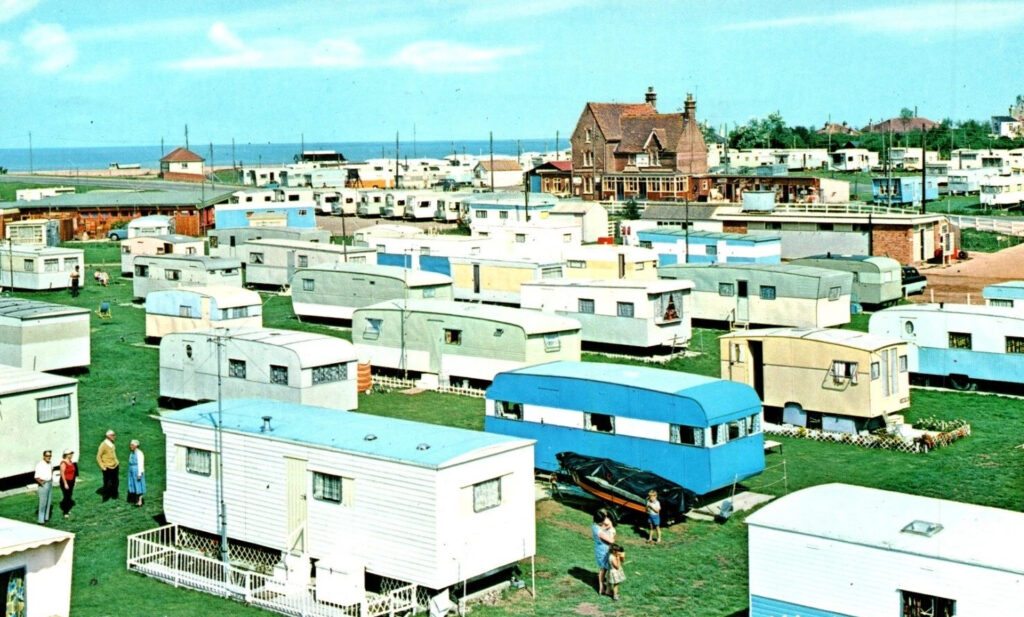
Their strategy quickly paid off: their company, Leisure Caravan Parks, went public in 1972 and just a decade after buying their first park, they owned 14 sites, containing more than 6,000 caravans, 550 holiday bungalows and 240 residential caravans generating annual profits of over £900,000. The business also included three caravan sales centres and two marinas.
Graham Bourne & Bourne Leisure
Another entrepreneur to seize on the growing caravan boom was Graham Bourne. Raised in the Potteries, he had briefly played football for Stoke-on-Trent before trading the pitch for the world of business. His first venture was a bicycle shop at 23A Tower Square in Tunstall, but by the early 1960s he had his eye on the leisure industry.
In 1962 he bought a bare-bones camping/caravan park at Black Rock Sands, near Porthmadog – a site that had been welcoming campers since the 1930s. He named it Greenacres and teamed up with Wolverhampton businessman Dennis Jeavons of the Gailey Group to fill the park with new customer-owned caravans. Gailey would go on to become the largest caravan distributor in the country
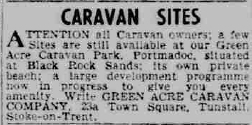
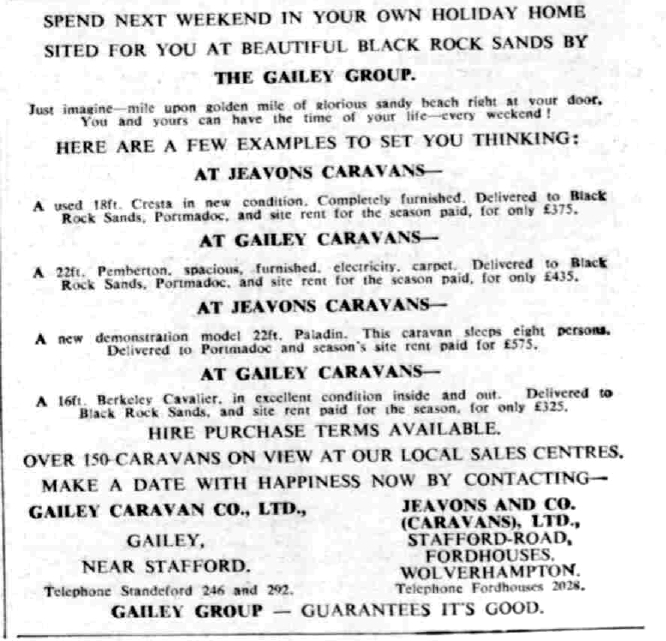
By the late 1960s Bourne had acquired three more caravan parks in North Wales, all under the Bourne Leisure name. He diversified into housing, building 64 homes beside Greenacres, and into hospitality, buying two hotels in Beddgelert. His prefab chalet company, Minerva, supplied other holiday parks, and he even launched developments in Malta and the Isle of Man.
In 1964 he became chairman of Porthmadog FC and revitalised the club by signing a number of high profile players including Welsh international Mel Charles. The following year he was credited with rescuing 6 people at the Llandudno Power Boat championships. He later became chairman at Oswestry FC and there was even talk of him joining the board at Wrexham. In 1967 he again teamed up with Dennis Jeavons to build the South Snowdon Harbour development in Porthmadog.
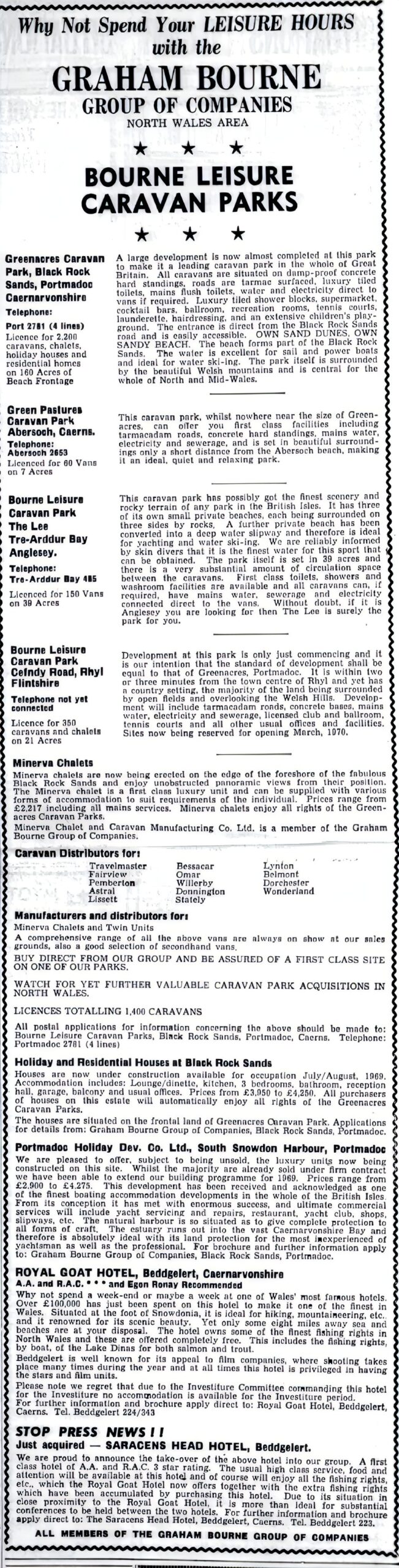
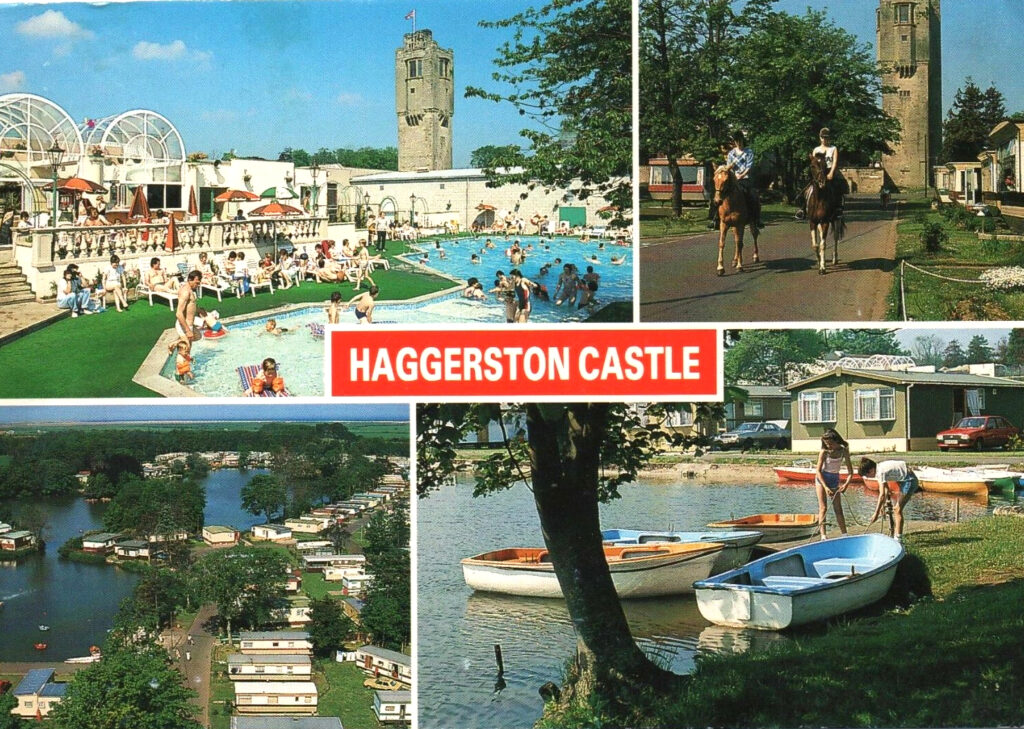
Between 1970 and 1973, he expanded his empire with the addition of seven more holiday parks, including Wemyss Bay (purchased from the Gailey Group for £155,000) and Haggerston Castle (acquired for £250,000).
He announced plans for a huge redevelopment of Port Dinorwic with 500 homes, a yacht club, shops, bars and restaurants. And he completed a residential housing project in Cheshire.
And in March 1974 he died from a heart attack aged just 42.
Bourne Leisure is sold
In December 1974, the directors of Leisure Caravan Parks acquired Bourne Leisure from Graham’s estate. At that time, Bourne operated 13 parks. Rather than merging these into their existing company, they chose to keep Bourne as a separate private company, running it alongside their public business.
In 1978 Leisure Caravan Parks was sold to Rank for £20 million. The deal, however, did not include Bourne Leisure, and over the next 20 years Harris & Allen, now joined by John Cook, continued to expand, steadily adding more holiday parks to the group including the former Holimarine camps at Burnham on Sea, New Quay and Hopton
History of Haven Holidays
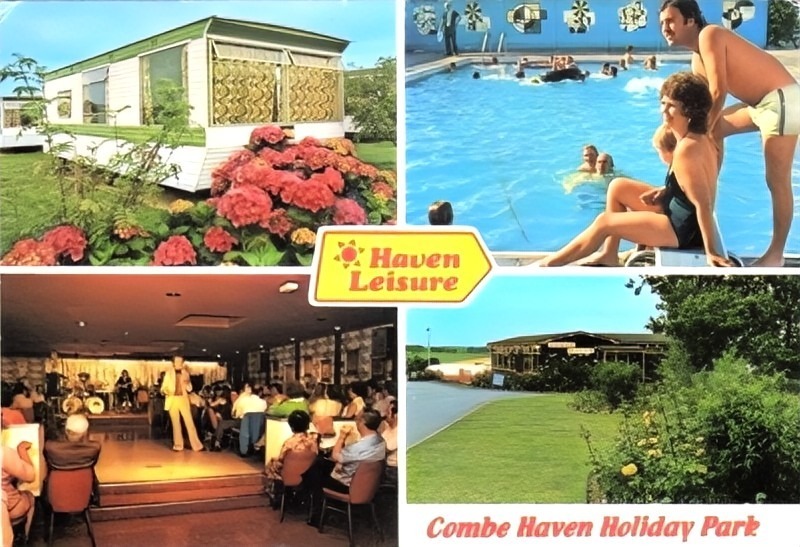
During the 1970s, English China Clays plc (ECC) began diversifying into the leisure sector, acquiring two caravan parks at Presthaven Sands (Prestatyn) and Tolroy Holiday Village (Cornwall). In 1978, they expanded further by purchasing three more parks from the Gailey Group for £1.6 million – Dennis Jeavons had sold Gailey in 1968 to the JF Nash company. These sites were Combe Haven (Hastings), Ashcroft Caravan Site (Minster), and Lakeside Lido (Cleethorpes). Later that year, ECC brought all five of its parks together under a new trading name: Haven Leisure.
In 1982, ECC acquired the Guinness leisure division for £13.2 million. The deal brought nine holiday parks into the group, all of which had previously traded under the Toucan Holidays name. These were quickly rebranded as Haven parks. That same year, Haven relocated its headquarters from St Austell to a new 10,000 sq ft office building in Truro.
Rank Leisure
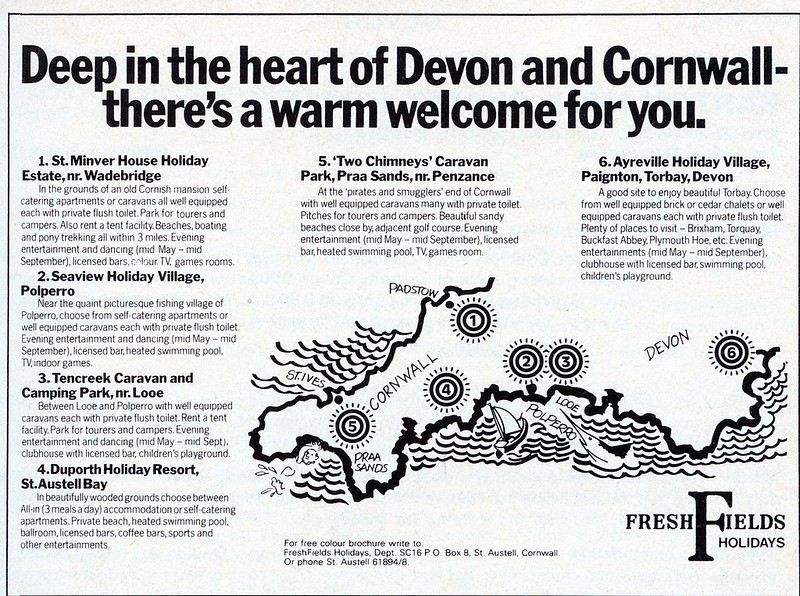
Rank entered the holiday business in 1972 with the £43 million purchase of Butlins. Over the following years they added a handful of smaller holiday parks, which were run under the Freshfields Holidays name.
In 1978, Rank expanded further by acquiring Leisure Caravan Parks. for £20 million, a deal that included 17 caravan parks. Rank then rebranded these new parks under their new Leisure Holidays name, with the Freshfields name later being phased out.
Another major step came in February 1986, when Rank bought Haven Holidays from English China Clays for £37.5 million. The purchase added 16 parks, which were combined with Rank’s existing 15. From 1987 onward, all 31 parks were rebranded as Haven Holidays. The deal also saw the closure of Haven’s Truro head office, with 55 jobs lost as operations moved to Hemel Hempstead. Staff were said to be “shattered.”
Meanwhile, in 1987, Mecca Leisure – owners of Warner Holiday Camps – purchased Ladbrokes’ holiday division for £55 million, rebranding all 17 sites under the Warners name.
That structure didn’t last long. In 1990, Rank acquired Mecca Leisure, bringing Warner’s holiday camps and the former Ladbrokes caravan parks into the fold. The caravan parks were rebranded yet again under Haven name, while the holiday camps continued to operate as Warners.
History of Parkdean Holidays
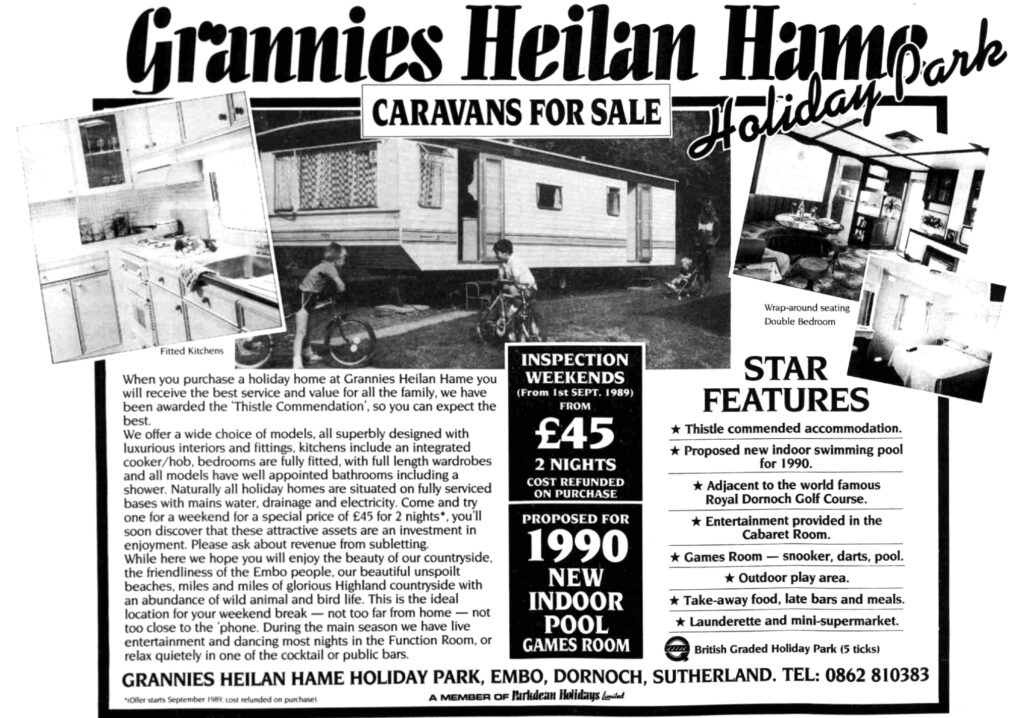
Newcastle-based Parkdean Holidays was established in 1989 with the acquisition of five holiday parks from Beazer Leisure for £6.8 million. Later that same year a sixth park was added with the purchase of Grannie’s Heilan’ Hame.
During the early 1990s Parkdean expanded further, acquiring four additional sites – three in East Anglia and one in Dorset. In 1995, Parkdean was sold to Vardon Leisure for £17.8 million, but just three years later it changed hands again when Rank acquired the business for £38 million. Rank subsequently rebranded all of the former Parkdean parks under the Haven name.
Bourne Leisure buys Rank
In 2000, Bourne seized a major opportunity when Rank chose to dispose of its entire leisure division. For £650 million, Bourne acquired Butlins (3 sites), Haven (56 sites), and Warner (13 sites). Remarkably, this deal effectively saw the Bourne directors buying back many of the same holiday camps they had originally sold to Rank back in 1978.
To manage the large debt taken on in the purchase, Bourne launched an immediate programme of disposals. The strategy was to retain the largest and most profitable sites while selling off the rest. Between 2000 and 2004, over 40 caravan parks were sold.
Park Resorts was created in 2001 by a consortium of former Haven/Rank executives to take advantage of the sell-off of parks by Bourne Leisure. The new company acquired 12 of the former Haven sites.

Around the same time, some of the former Parkdean directors formed a new company called Parkdean Holiday Parks Ltd and bought nine parks – many of these were the same parks that the old Parkdean had owned in the 1990s.. Cinque Ports Leisure purchased 11 parks and John Fowler Holidays bought two.
After the disposal, Bourne Leisure were left with 40 caravan parks – 19 of their original parks (which continued trading under their British Holidays name) and 21 parks which continued under the Haven name. A couple of the parks were later sold and eventually all their caravan parks were branded under the Haven name. Today, Haven operates 38 parks across the UK. Four of Graham Bourne’s original sites – Greenacres, Cala Gran, Haggerston Castle, and Seton Sands – are still open under the Haven brand.
More Mergers and Consolidation
While Bourne Leisure was settling into its role as the UK’s dominant holiday group, a series of further acquisitions and mergers reshaped the rest of the industry.
In 1995, Queensborough Holdings purchased three former Maddieson holiday camps from Oakley Investments for £10.75 million. These were merged into their Leisure Great Britain division, which continued to expand through the late 1990s. By the early 2000s the business operated 19 parks under the Great British Holidays brand – not to be confused with Bourne Leisure’s British Holidays name.
In November 2004, Queensborough sold Great British Holidays to ABN Amro Capital, the venture capital arm of Dutch banking giant ABN, for £105 million. Just a month later, ABN also acquired Park Resorts for £165 million. The two businesses were merged under the Park Resorts name, creating the UK’s second-largest holiday park operator with 35 sites. Expansion continued in 2007 with the purchase of Weststar Holidays, adding four more parks.
A decade later, in 2015, Park Resorts merged with Parkdean Holidays. The combined business then tarded under the Parkdean name, establishing itself as the UK’s largest holiday park operator with more than 60 caravan parks nationwide.
Meanwhile, Cinque Ports Leisure had been pursuing its own growth path. Founded in 1984 with a single site at Frenchman’s Beach in Rye, the company expanded aggressively throughout the 1990s and early 2000s, acquiring 11 former Haven parks from Bourne Leisure. In 2006 it was sold for £130 million, and the following year it was rebranded as Park Holidays UK. Today, the business is owned by the American group Sun Communities and operates more than 50 holiday parks in the UK.
John Fowler Holidays stands out as one of the few major operators still in family ownership. Founded in 1953 with nothing more than a single caravan in a field, the business has grown steadily over the decades. Today, it still remains under the control of the Fowler family and operates 14 holiday parks across south-west England.
We’d love to have any input on this article. Please feel free to leave a comment below.
