The site opened in 1922, founded by Colonel Sir Walter Blount, and was known as New City. It occupied the grounds of the former Norman Thompson Aircraft Factory at Middleton-on-Sea – a once-busy plant that had produced seaplanes during the First World War but had since fallen into disuse. Rather than starting from scratch, Blount made use of what was already there: the old hangars and outbuildings were converted into holiday accommodation, dining rooms, and recreation spaces. The project cost around £15,000 to complete and could house up to 300 guests.
A newspaper report from 1922 stated “there is a large and lofty dining hall equipped with all possible catering facilities, also a reception room, music room, smoking room, card room, and a fine billiards saloon, which might almost be called a palm court. Another building is arranged as a dance and concert hall, while there is admirable provision for ladies and gentlemen’s hairdressing rooms, baths, etc. In the way of sports, too, we noted a big building provided for four hard tennis courts, as well as an outside enclosure for two lawn tennis courts. The bedrooms are spacious, and nicely furnished, some rooms also being arranged as flats with balconies overlooking the sea. There are also some furnished bungalows. One large building has been equipped as a garage for 100 cars, with workshops and a staff of motor mechanics.“
When the camp first opened, it stood amid open countryside, surrounded by little more than fields and hedgerows. But progress soon caught up with it, and before long new houses and estates began to spread across the landscape. Spotting an opportunity, Sir Blount established his own construction company, which went on to build many of the area’s new homes.
The camp was remarkably advanced for its time, boasting its own electricity generating plant – the very first to supply power to the residents of Elmer and Middleton. It even operated a state-of-the-art sewage disposal plant, and during its inaugural test, the consulting engineer famously drank a glass of the treated effluent to prove its purity.
Within its grounds, the camp contained a small parade of shops and its own bakery, which soon gained a worldwide reputation. Around seventy full-time staff were employed, with preference given to veterans of the First World War. Much of New City’s success, however, was down to the steady hand of its manager, Mr. Butt, who oversaw operations from 1924 until 1940.
One of the more unusual pastimes that brought widespread attention to the site was a game of musical chairs – played on the beach with cars! An old gramophone provided the music, and when it stopped, the drivers would leap from their vehicles and dash to claim one of the vacant seats.


Sir Blount’s entrepreneurial streak occasionally brought him into conflict with the authorities. In the camp’s first season, he was fined £10 for selling beer without a licence after police raided the premises and discovered two large casks and several dozen bottles. A few years later, in 1924, he found himself in trouble again – this time fined another £10 for illegally transporting pigs during a foot-and-mouth outbreak.
Disaster struck on Christmas Day 1929, when a huge fire swept through the dining room and the forty chalets above it, causing damage estimated at £10,000. Barely three months later, tragedy struck again – another blaze destroyed the camp’s power plant and ignited more than a thousand gallons of crude oil, leaving the site without electricity or running water.
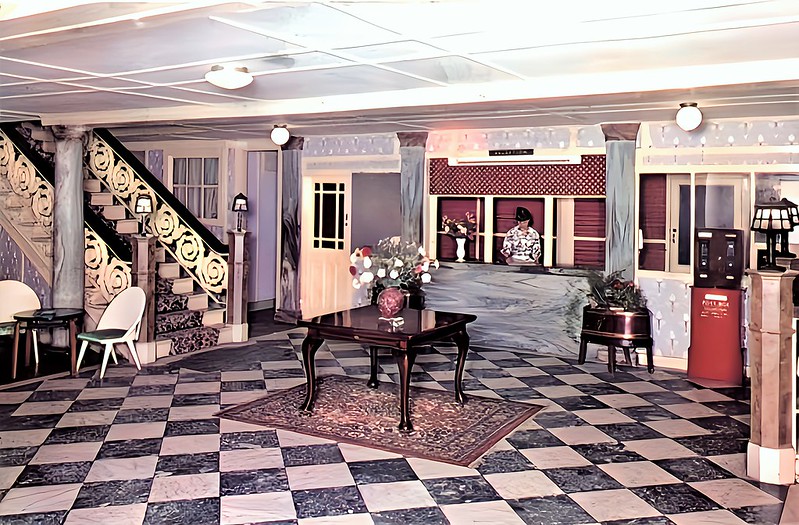
Undeterred, rebuilding soon began, and by 1932 a new 100-bedroom hotel had risen on the site, with each room boasting its own private bathroom – a rare luxury for the time. Beneath the reception area, a trapdoor led down to a network of old underground rooms and passageways dating back to the days of the aircraft factory.
Sir Blount sells New City
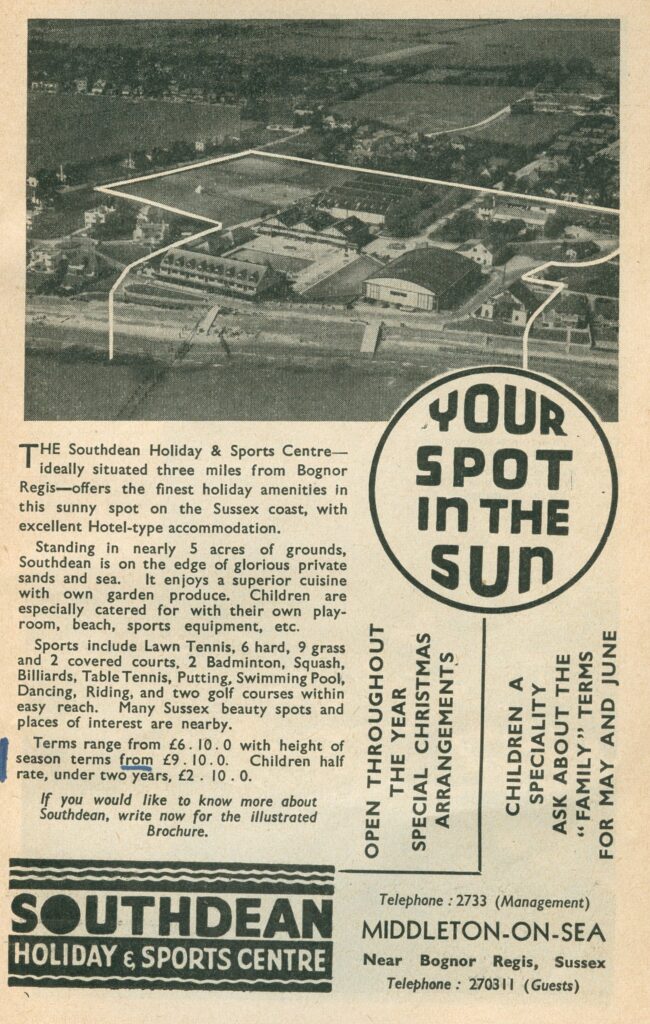
In 1933, Sir Blount sold the camp to Mr. Wonnacott, proprietor of the Carlton Hotel in Bognor Regis, for a reported sum of between £40,000 and £50,000. Soon after the change in ownership, the hotel was renamed The Southdean, and day visitors were welcomed to enjoy its extensive sporting facilities. The following year saw the launch of the Southdean Covered Court Tennis Championship, an event that quickly attracted many of the leading players of the day and continued to be held annually until 1952. In 1937, a large outdoor swimming pool was added, further enhancing the resort’s reputation as one of the South Coast’s most modern leisure destinations.

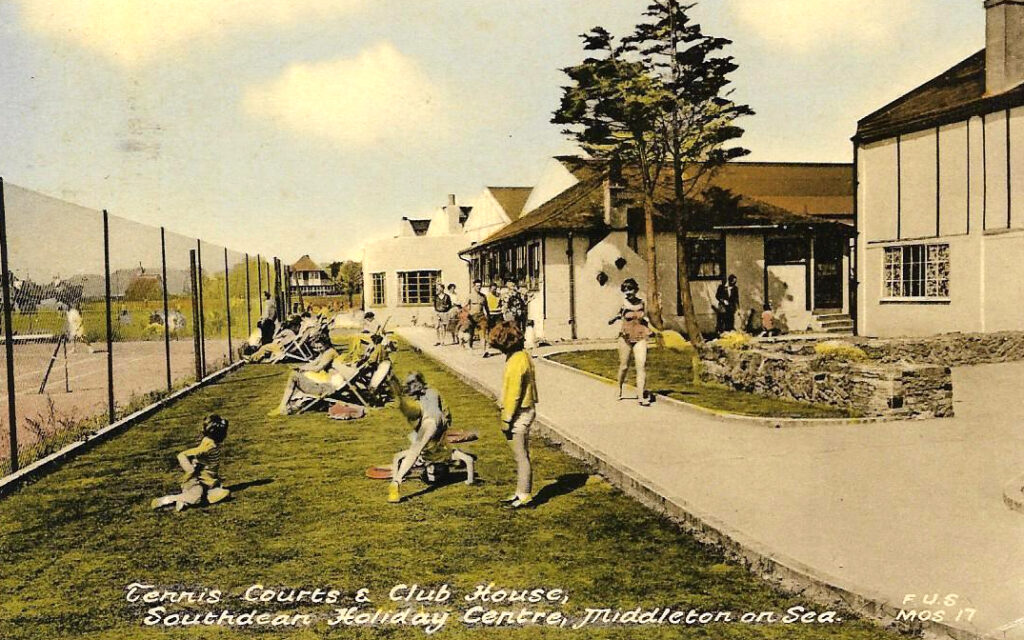
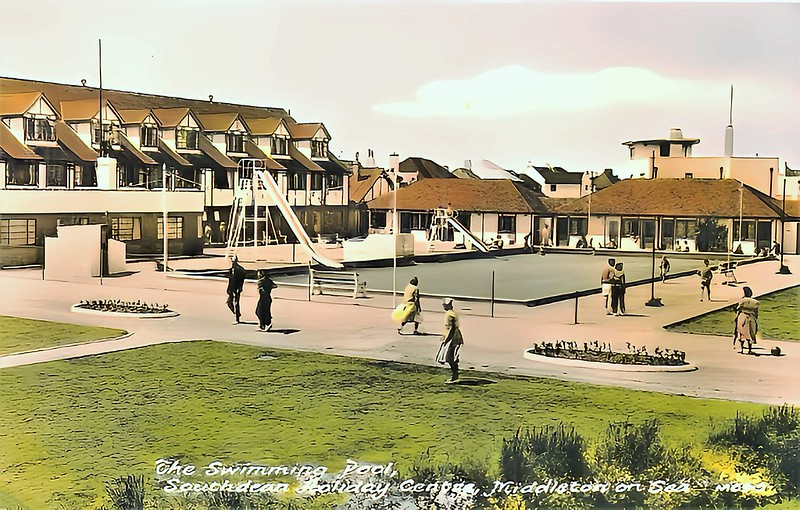
Southdean Sports Club
The camp was requisitioned in 1940 by the Grenadier Guards and suffered considerable damage during the war years. In 1947 it was purchased by Mr. Shaw-Porter, a former Mayor of Andover, who held a well-attended public meeting to outline his ambitious £50,000 redevelopment plan. He opened the meeting with the blunt declaration: “I am not here for my health – I am here as a businessman, and for what I can get out of it.” Despite the remark, he went on to address a wide range of questions, and by the end of the evening, most locals appeared satisfied with his proposals.
Following an extensive post-war refurbishment, the site reopened under a new name – Southdean Sports Club. Its indoor facilities were impressive, featuring tennis and squash courts, badminton, table tennis, indoor lawn bowls, billiards, and a large licensed ballroom. Outside, members could enjoy a further fifteen tennis courts, an eighteen-hole putting green, and a set of riding stables. The adjoining hotel, now geared more towards the family holiday market, included a restaurant that quickly became a favourite with club members and visiting guests alike.
In 1954, Mr. Shaw-Porter submitted plans to convert part of the land into a touring caravan site, but the proposal sparked fierce opposition from local residents. At a packed public meeting, speakers denounced the idea in colourful terms, describing it as “sinister,” “objectionable,” “fearsome,” and “absolutely grotesque.” In the face of such strong resistance, the plans were ultimately rejected.
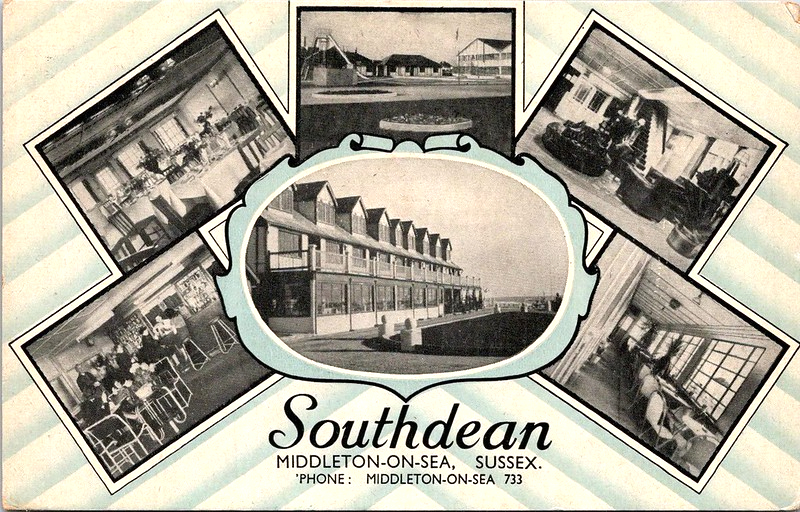
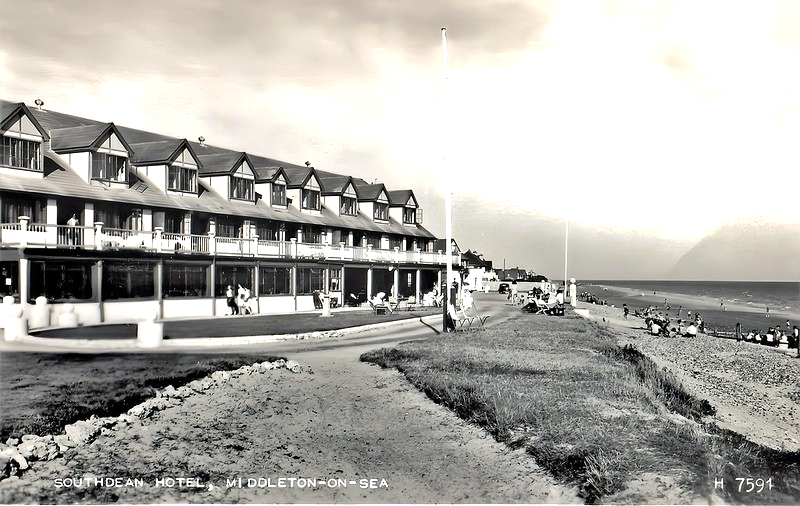
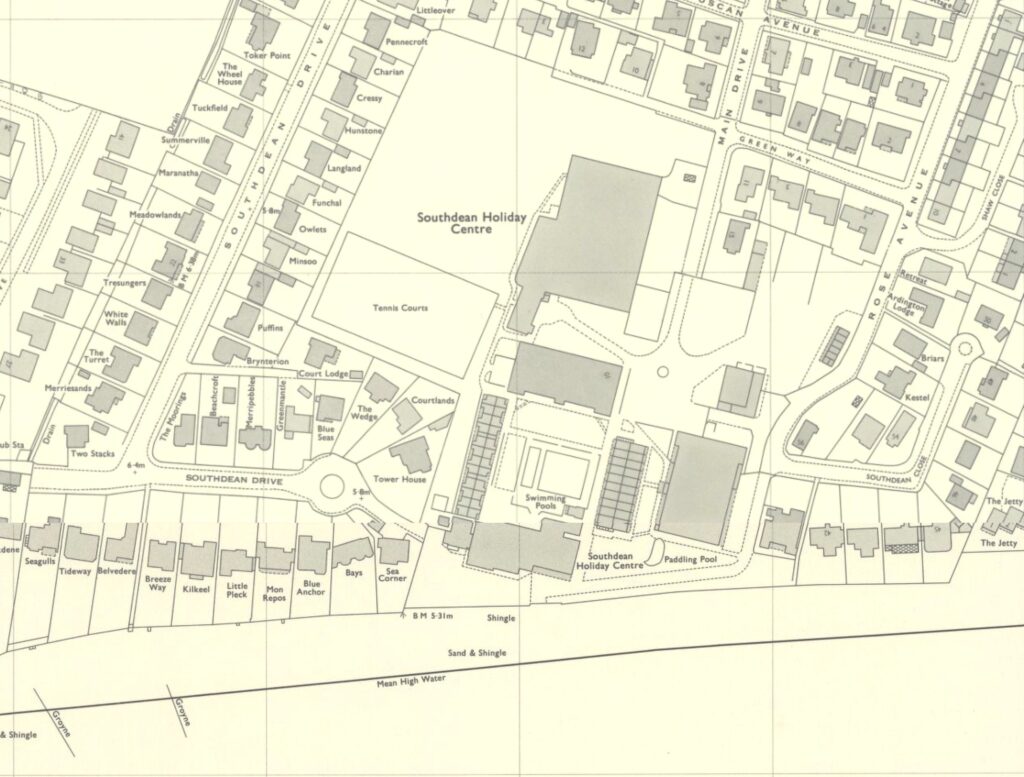
Southdean Holiday Centre
In 1957, the complex was sold to architect Leslie Dean, who traded under the name Lesdean Ltd. Dean was no newcomer to the holiday camp business – his career in the industry stretched back to the 1930s, when he built his first camps at Brean Sands and Osmington Bay, both of which he later sold to Fred Pontin after the war. He subsequently purchased the Pakefield Holiday Camp, which also passed into Pontin’s hands in 1956. Just a few months later, Dean arrived in Middleton-on-Sea and announced that this would be his final venture, as he intended to settle and retire in the area.
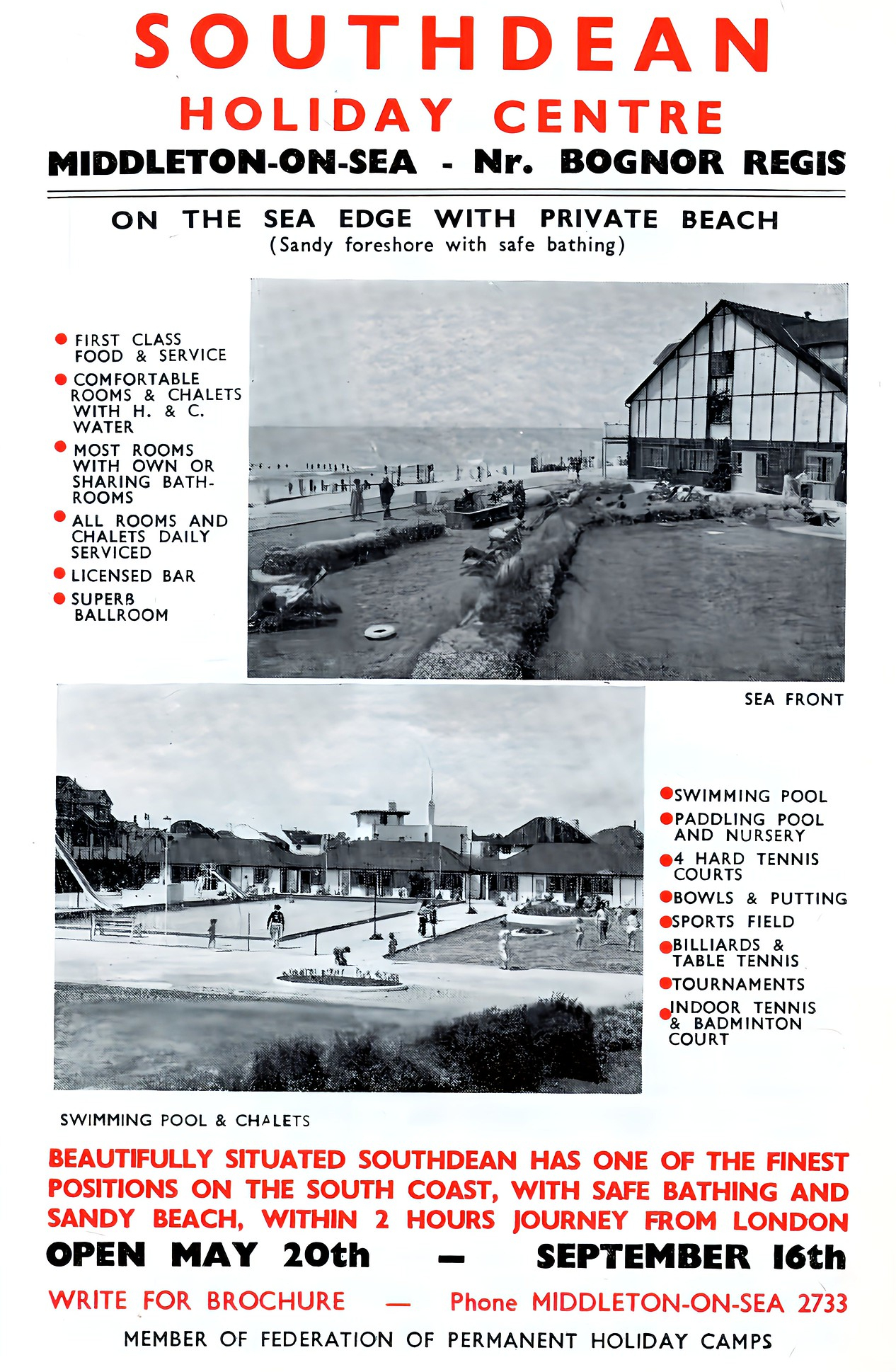
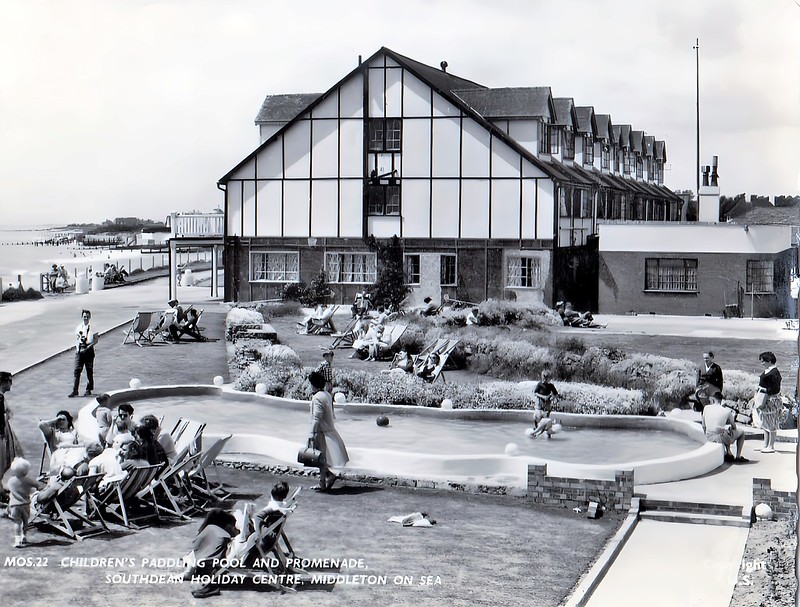
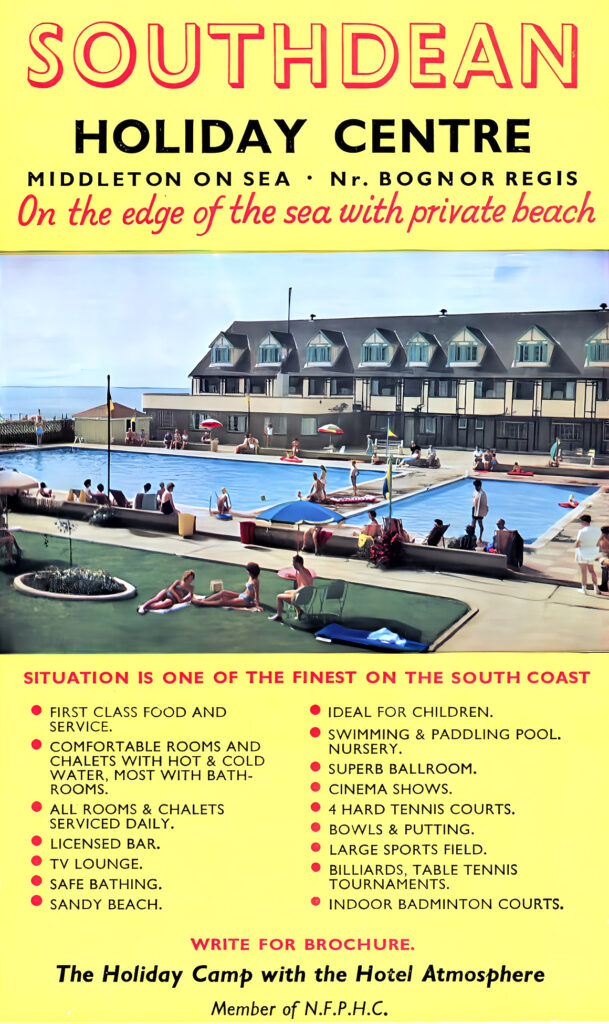
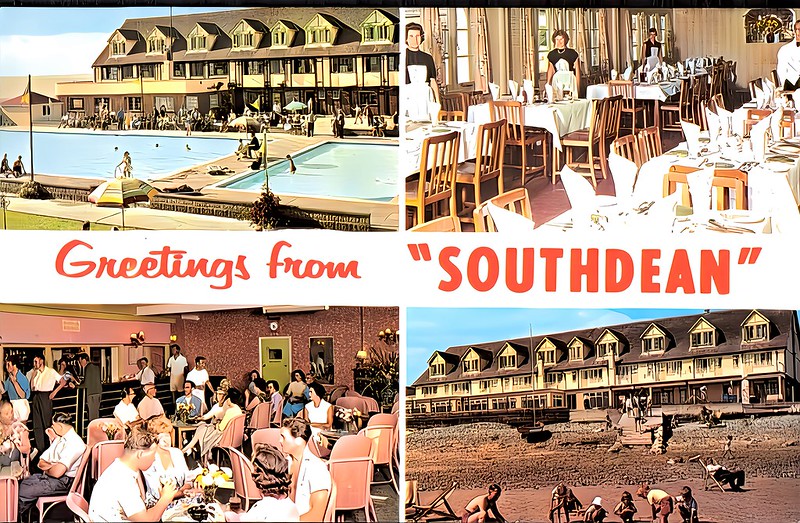
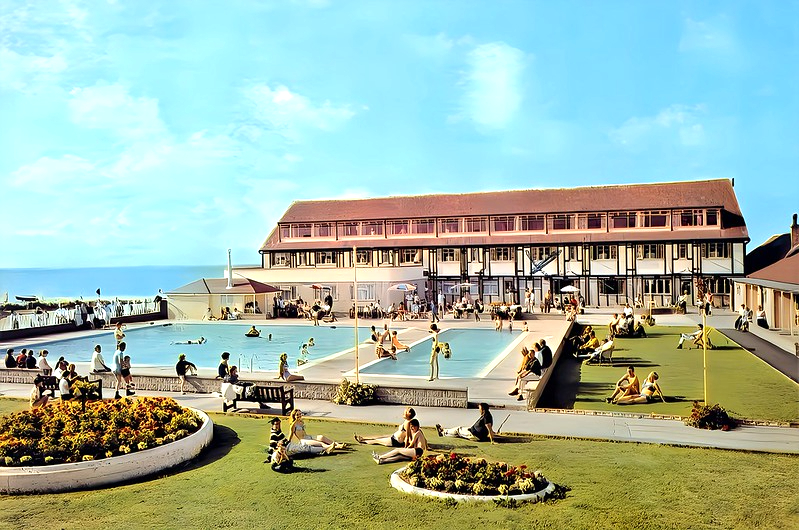
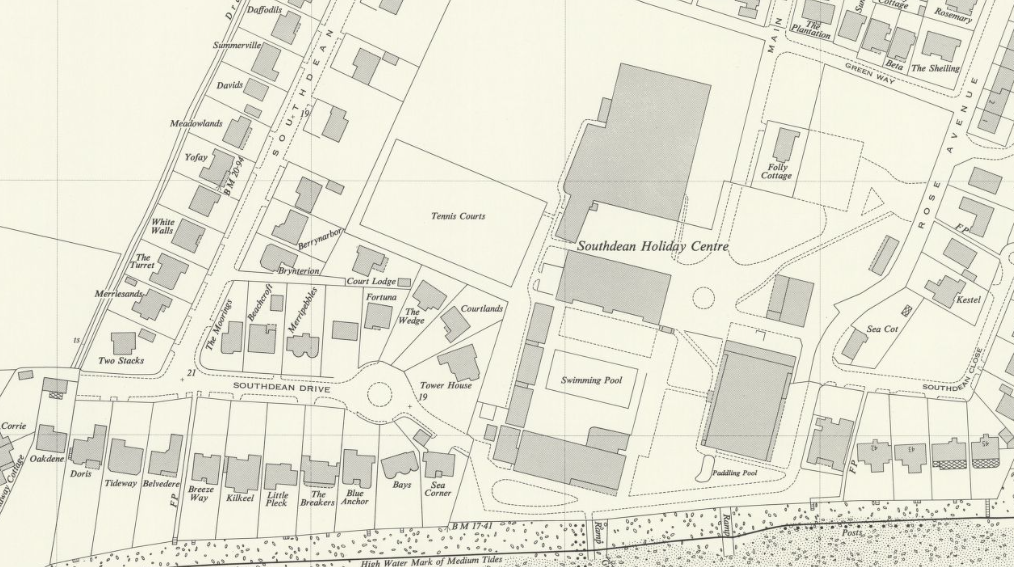
The complex was soon renamed Southdean Holiday Centre. A new ballroom and dining room were constructed, and several two-storey chalet blocks were added across the grounds. During the winter months, a large carpet was laid in the ballroom, which became home to a newly formed indoor bowls club. The site could now accommodate up to 440 guests, with rooms available either in the hotel or in the chalet blocks, and it was promoted as “the holiday camp with the hotel atmosphere.” Sir Walter Blount passed away in 1958.

Sussex Coast Country Club
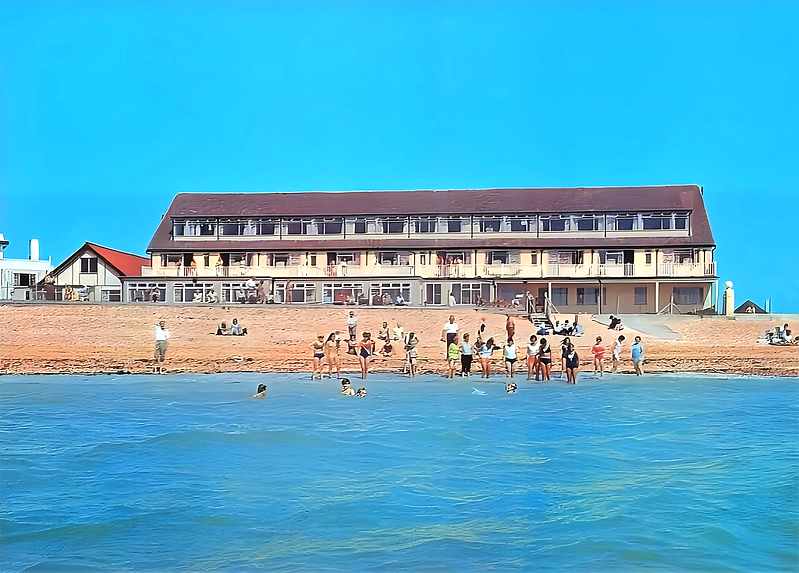
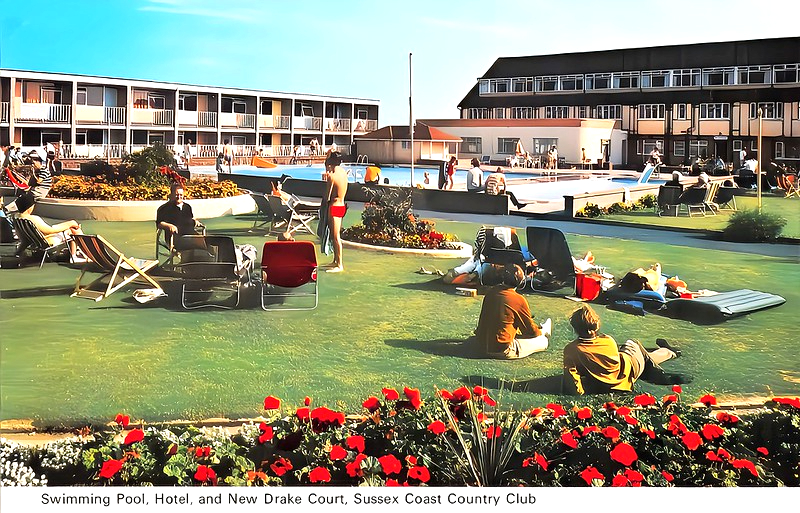
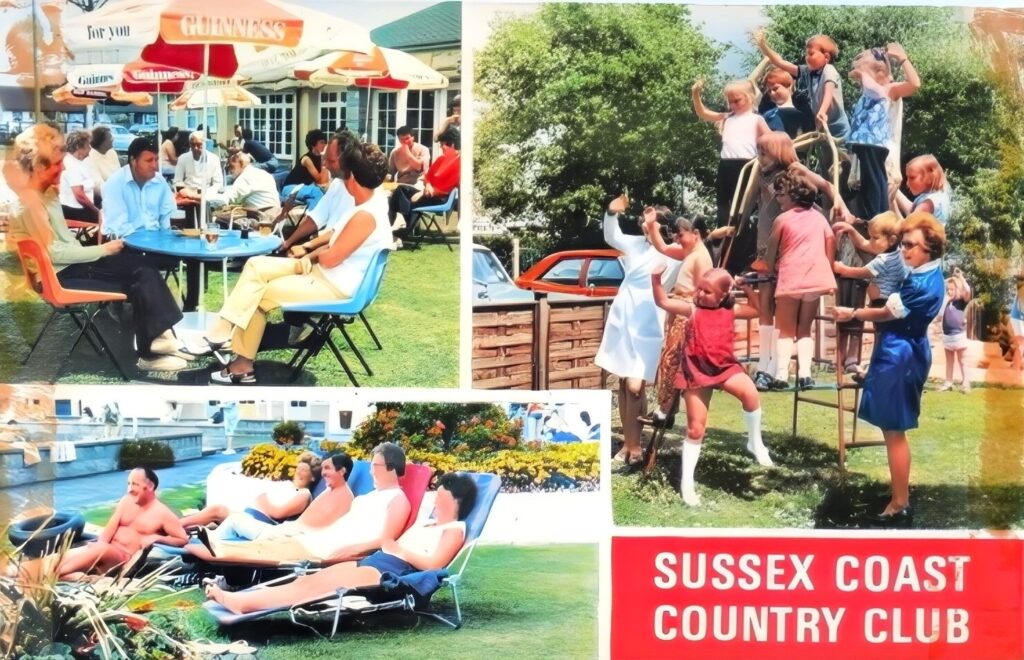
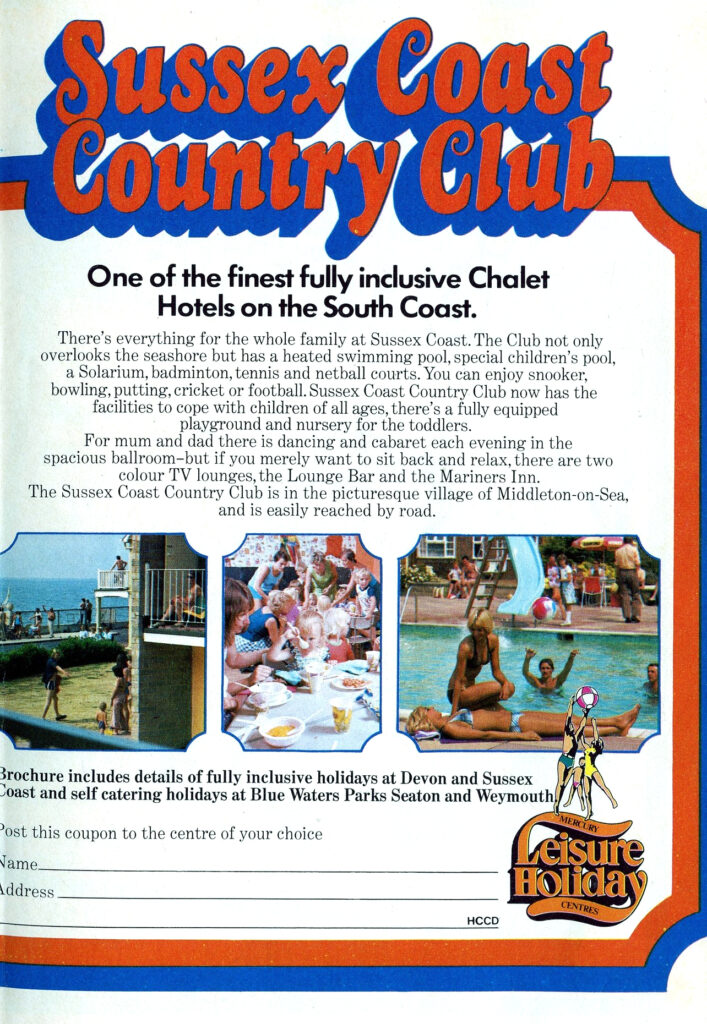
In February 1969 the camp was sold to Liverpool City Caterers for £175,000 and in 1972 it was renamed Sussex Coast Country Club, being marketed under their Mercury Leisure Holidays division. Liverpool City Caterers could trace its origins back to 1875 and owned a wealth of different business including restaurants, hotels, betting shops, holiday parks and hi-fi electrical shops.
The takeover era
Liverpool City Caterers later changed their name to Leisure & General Holdings and In 1978 they were acquired by Ladbrokes in a £7.2 million hostile takeover. The company’s four holiday parks, including Sussex Coast, were then rebranded under the Ladbrokes Holidays name
In 1987 Ladbrokes sold all their holiday parks to Mecca Leisure, who owned Warner’s Holiday Camps. So all the old Ladbroke camps were then rebranded under the Warner name.
In March 1990, Mecca Leisure, acting through its Garsington Estates property arm, submitted plans to demolish the camp and replace it with housing, citing continued financial losses as the reason for closure. The proposal was described by West Sussex County Council as both “innovative and imaginative”, and planning approval was duly granted. It was announced soon after that the camp would close at the end of the 1990 season,
But just three months later, Rank Leisure swooped in and bought Mecca, and the redevelopment plans were quietly shelved. The camp carried on trading and was rebranded under the Shearings name in 1991, operating much as it always had. Then in 1994, Rank – acting through its MRC Property division – revived the idea and applied to have the planning permission extended for another five years. It was finally confirmed that the camp would close at the end of the 1996 season, making way for a housing development “comprising a total of 115 detached, semi-detached, terraced houses and flats.”
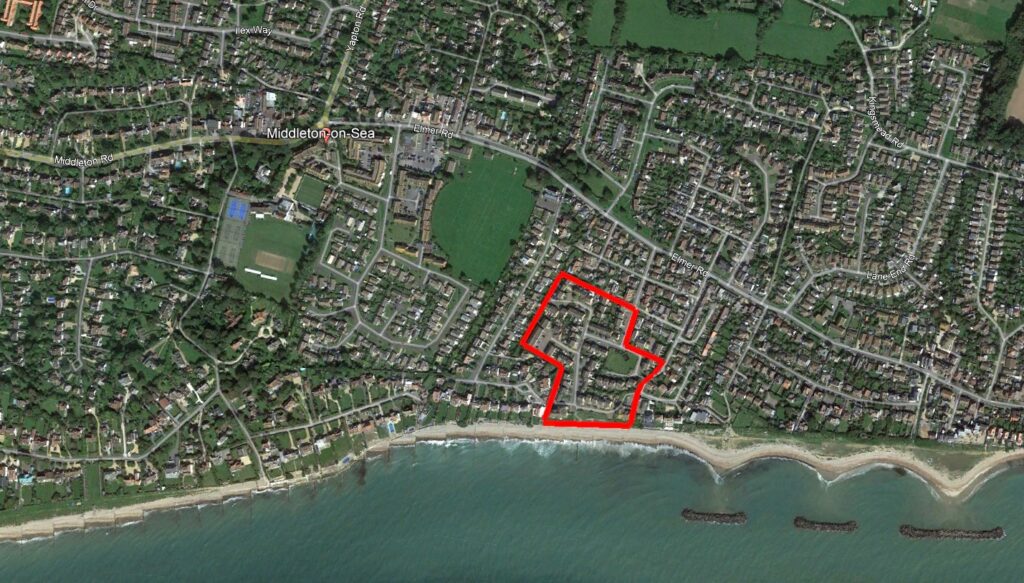
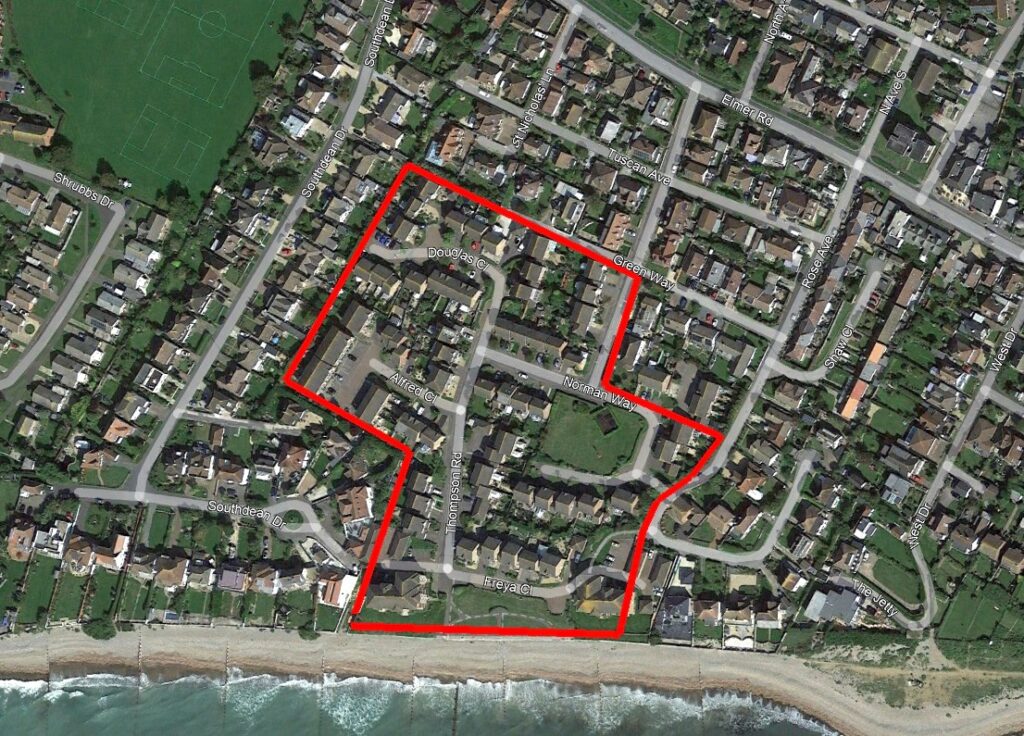
Crest Homes soon demolished everything and started work on a new housing development known as Saxon Reach. The first show-homes were ready for inspection in February 1998 with prices starting from £75,000.

We’d love to hear your memories and stories of Southdean Holiday Camp. Please feel free to leave a comment below
