South Snowdon Harbour, Porthmadog

The idea of a new housing development on the derelict wharf in Porthmadog was first raised in 1963, when Wolverhampton builders John Mclean & Sons received outline planning permission to build 41 cottages and 129 flats. The scheme was revived in 1967 when Graham Bourne and Dennis Jeavons joined forces to propose a development of 132 flats and maisonettes. Bourne was the founder of Bourne Leisure and the owner of the nearby Greenacres caravan park at Black Rock Sands, while Jeavons was the founder of the Gailey Group, then the country’s largest caravan dealer.

This was intended as the first stage of a much grander project: a 900-unit marina development with a hotel, yacht club, ballroom, shops, restaurants, and even a boatbuilder’s yard. Priced between £2,700 and £4,700, the units were marketed towards the “busy Midlands industrialist” seeking either a weekend retreat or a sound investment property.
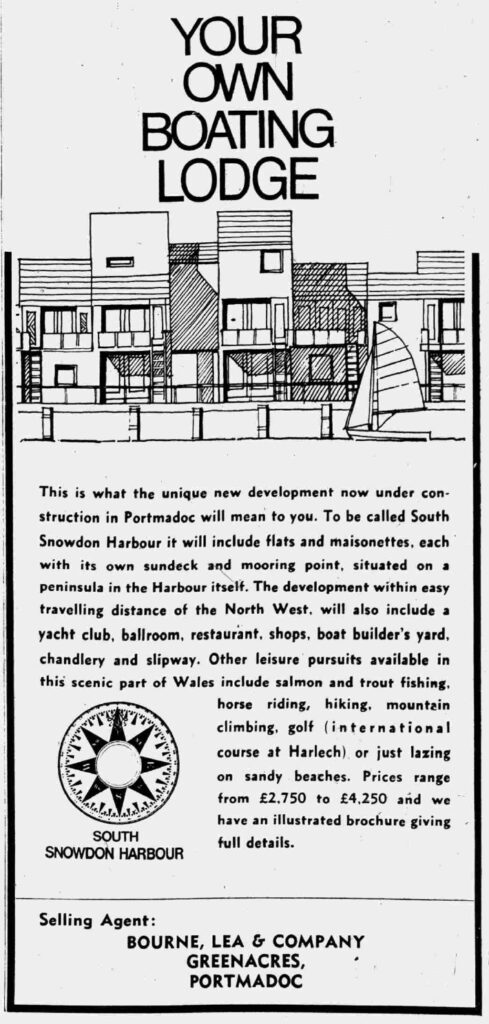
South Snowdon Harbour advert from 1967

Costing £500,000, construction began in August 1967—but the project quickly ran into trouble with the local authority. Chief among the disputes was the council’s insistence on slate roofs, a requirement dating back to the original planning application. Bourne objected, claiming that using locally quarried slate would add £250 to the cost of each unit and that the sizes he required were not available in sufficient quantity. Ignoring the stipulation, he pressed ahead.

In what was later described as an “act of defiance,” Bourne installed asbestos tiles on the first five units. The move ignited a major controversy and led to a full-scale dispute. Although one councillor admitted he “couldn’t tell the difference,” the council regarded this as a flagrant breach of planning and referred the matter to a public inquiry overseen by the Secretary of State for Wales.

In 1968, the verdict came down in favour of the council. The developers were ordered to complete the units with slate roofs as originally stipulated. Though the homes were eventually finished in line with the ruling, the outcome left a bitter taste. Frustrated by what he saw as “consistently obstructive decisions,” Bourne abandoned the second phase of the development entirely.
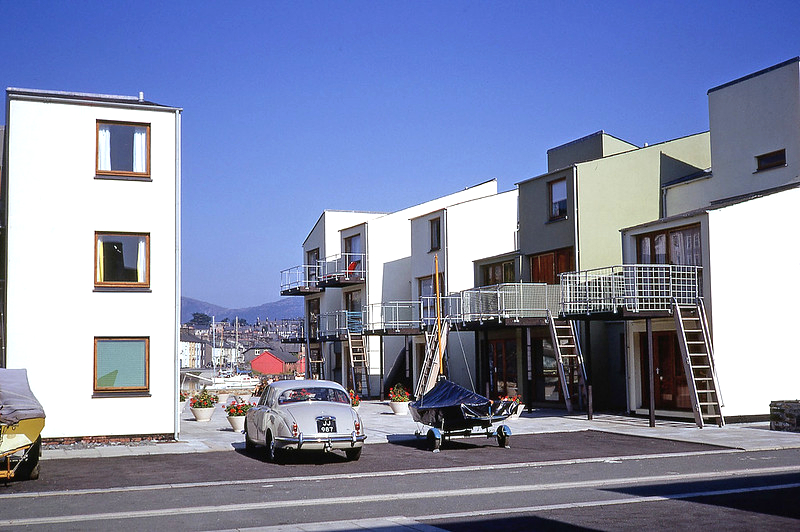
South Snowdon Harbour seen in 1971

He soon turned his attention to Port Dinorwic, where in 1973 he announced ambitious plans for a £3 million scheme including 500 new homes and a marina with a “luxurious” yacht club and other facilities.

Sadly, Bourne died the following year, and the project never came to fruition. His company, Bourne Leisure, was later sold and eventually grew into one of the largest holiday park operators in the country.
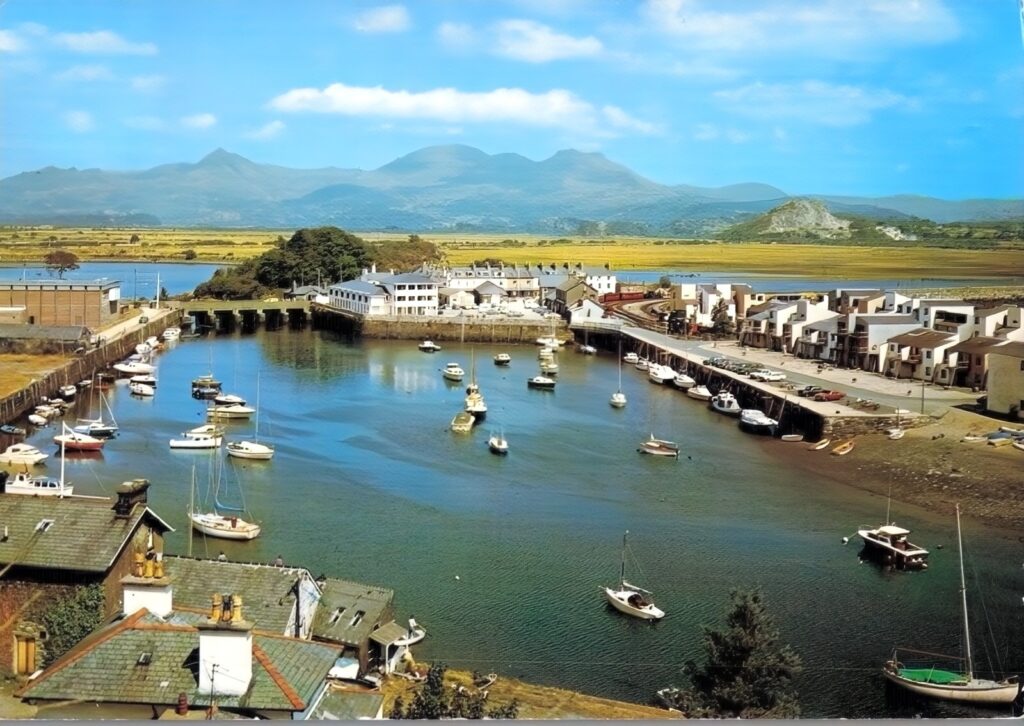
Porthmadog harbour with the South Snowdon apartments on the right. The Ffestiniog Railway station can be seen in the middle

We’d love to hear your stories and memories of South Snowdon Harbour. Please feel free to leave a comment below.

Supported by Retro Stock Photography

Leave a Comment

Your email address will not be published. Required fields are marked *

error:
We do not share any of your data. If you would like to read more please visit our Privacy Policy View more
Cookies settings
Accept
Privacy & Cookie policy
Privacy & Cookies policy
Cookie name Active

Who we are

We are Retro Rambles and our website address is: http://retrorambles.com.

Comments

When visitors leave comments on the site we collect the data shown in the comments form, and also the visitor’s IP address and browser user agent string to help spam detection. Your email address will not be publicly visible. However, the blog owner will receive it in a notification, along with your name, comment, and a link to your comment. If you’re concerned about privacy, consider using a pseudonym or dedicated email address for online activities. We reserve the right to delete any comments that are unrelated to the post or contain offensive content.

Cookies

If you leave a comment on our site you may opt-in to saving your name, email address and website in cookies. These are for your convenience so that you do not have to fill in your details again when you leave another comment. These cookies will last for one year. If you visit our login page, we will set a temporary cookie to determine if your browser accepts cookies. This cookie contains no personal data and is discarded when you close your browser. When you log in, we will also set up several cookies to save your login information and your screen display choices. Login cookies last for two days, and screen options cookies last for a year. If you select "Remember Me", your login will persist for two weeks. If you log out of your account, the login cookies will be removed. If you edit or publish an article, an additional cookie will be saved in your browser. This cookie includes no personal data and simply indicates the post ID of the article you just edited. It expires after 1 day.

Embedded content from other websites

Articles on this site may include embedded content (e.g. videos, images, articles, etc.). Embedded content from other websites behaves in the exact same way as if the visitor has visited the other website. These websites may collect data about you, use cookies, embed additional third-party tracking, and monitor your interaction with that embedded content, including tracking your interaction with the embedded content if you have an account and are logged in to that website.

Who we share your data with

We do not share any of your data

How long we retain your data

If you leave a comment, the comment and its metadata are retained indefinitely. This is so we can recognize and approve any follow-up comments automatically instead of holding them in a moderation queue. For users that register on our website (if any), we also store the personal information they provide in their user profile. All users can see, edit, or delete their personal information at any time (except they cannot change their username). Website administrators can also see and edit that information.

What rights you have over your data

If you have an account on this site, or have left comments, you can request to receive an exported file of the personal data we hold about you, including any data you have provided to us. You can also request that we erase any personal data we hold about you. This does not include any data we are obliged to keep for administrative, legal, or security purposes.
Save settings
Cookies settings