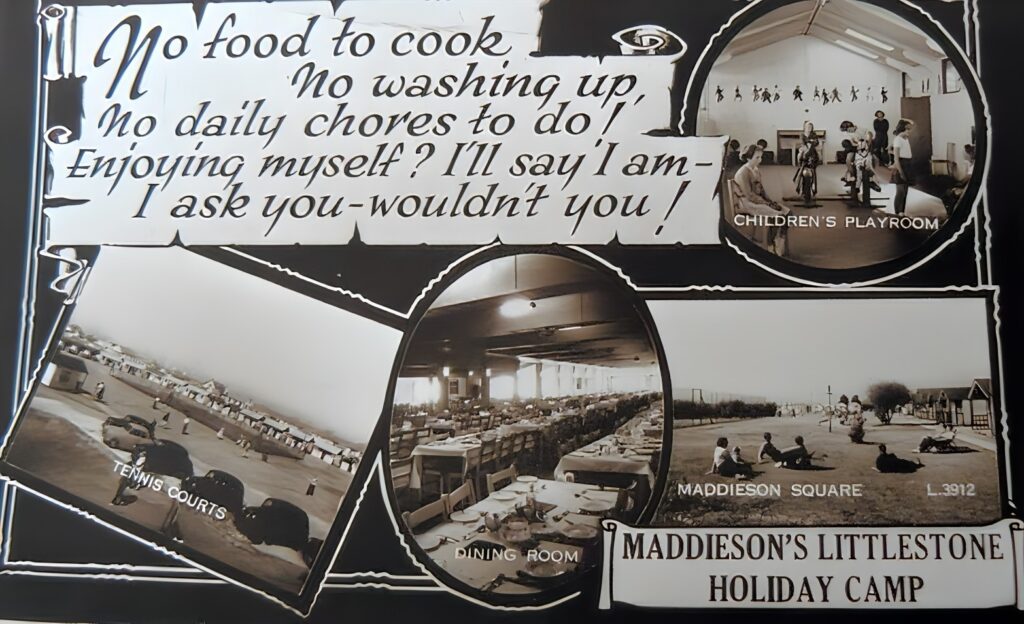
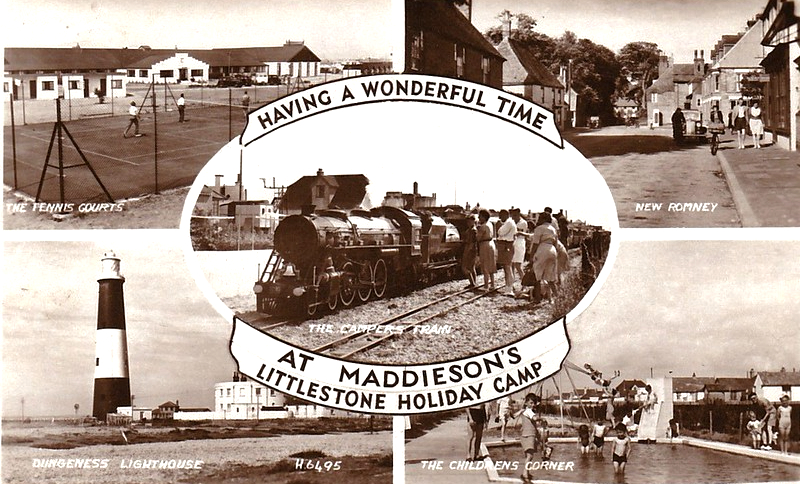
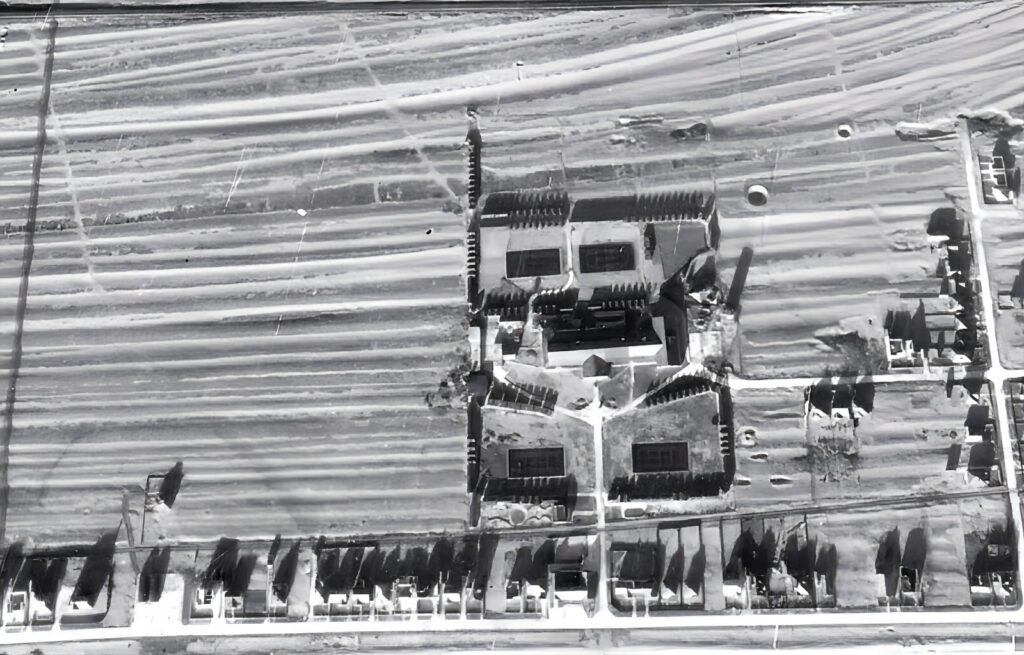
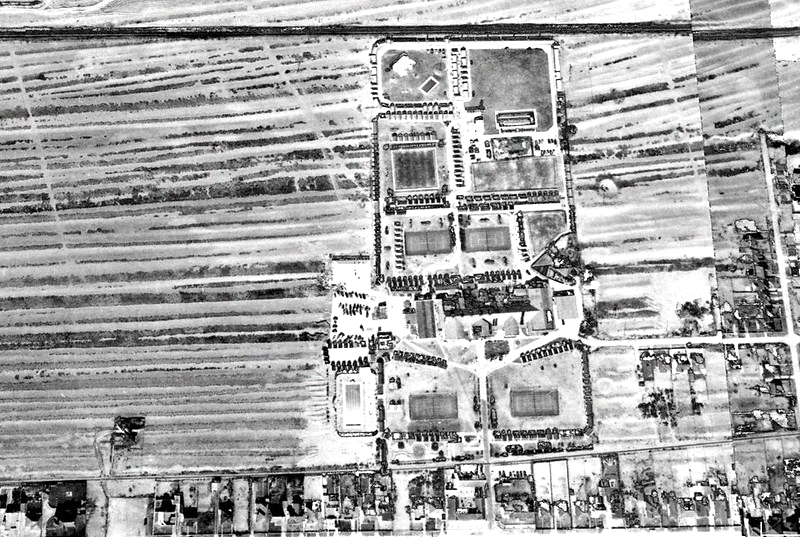
Harry Maddieson acquired his first holiday camp at Hemsby in 1922, and in 1928 he purchased land at Littlestone in Kent with the intention of opening a second camp, to be run by his son Ray once he turned 21. The camp opened in 1930 and became the first in the country to sell alcohol. At the time this was considered a bold and somewhat risky move, so the clubhouse was built at a distance from the main buildings and chalets. This original clubhouse still survives today as part of the camp-owned Romney Tavern pub on the seafront at Greatstone.
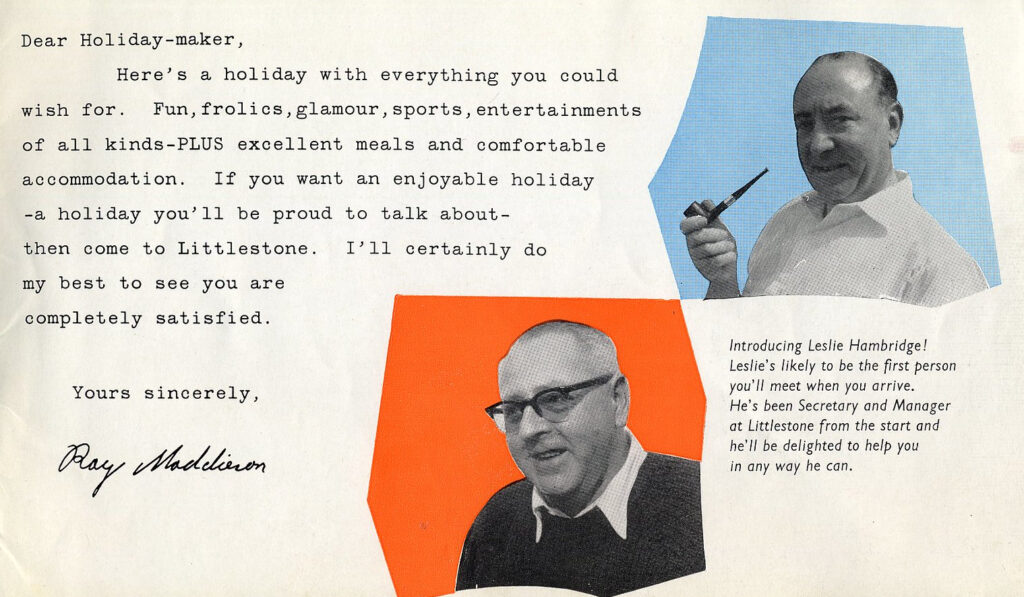
The site had no access to water, gas, electricity, or sewerage, so all of these utilities had to be installed by the camp itself, and it even operated its own gasometer. At the time, there were no roads leading to the site, so one was constructed specifically for the camp’s development; this road is still in use today as Dunes Road. In 1933, Leslie Hambridge, the camp’s chief assistant, married Eileen Maddieson, Ray’s sister.
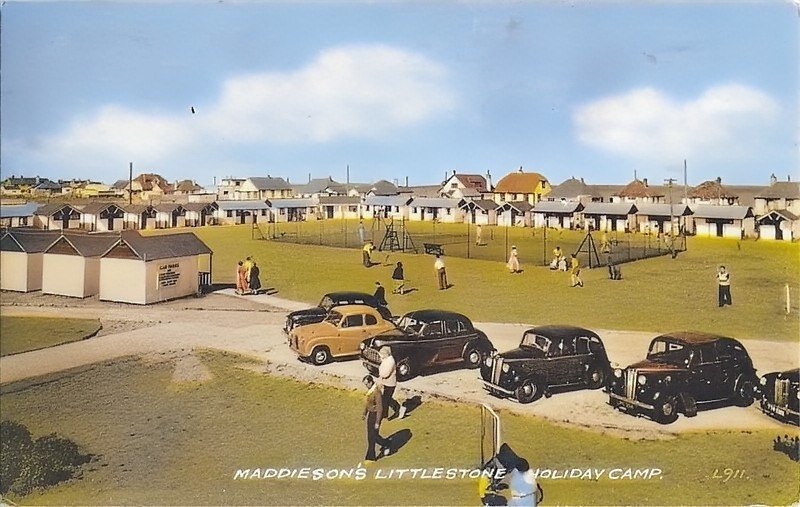
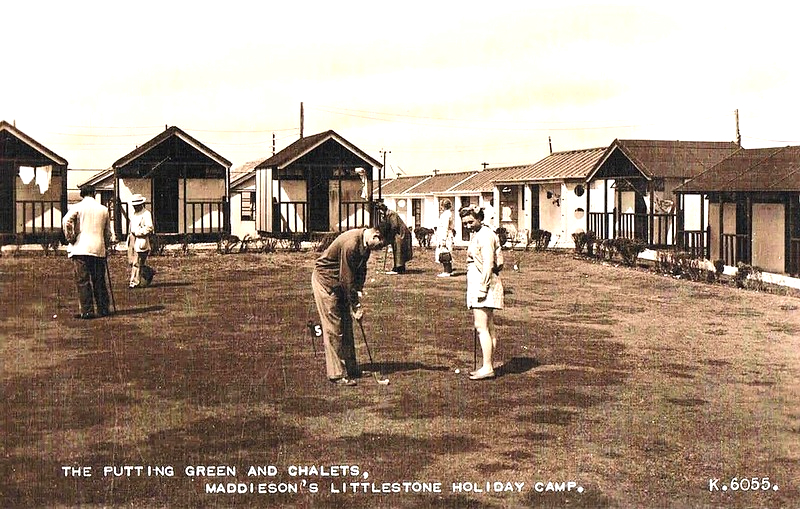
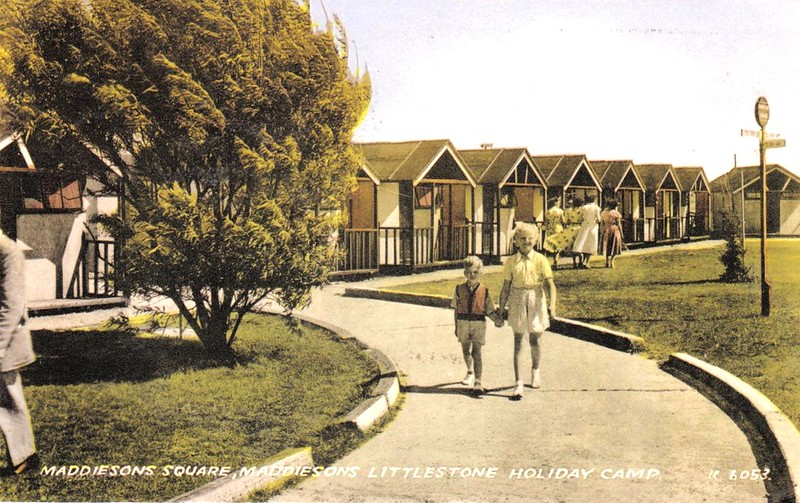
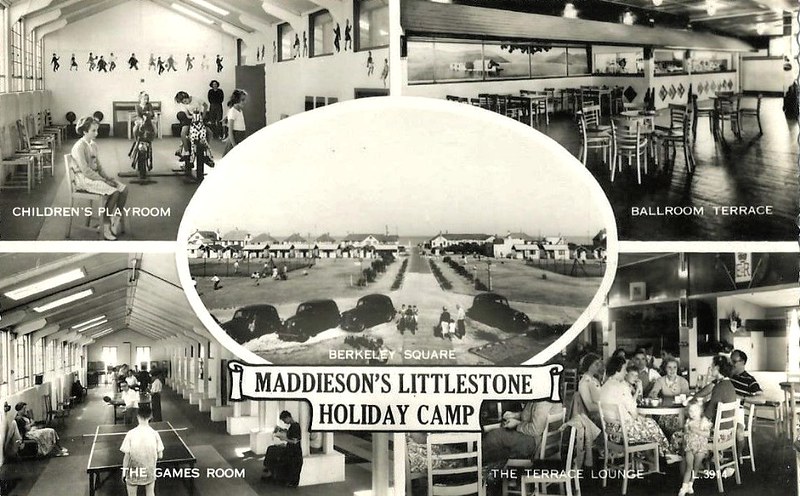
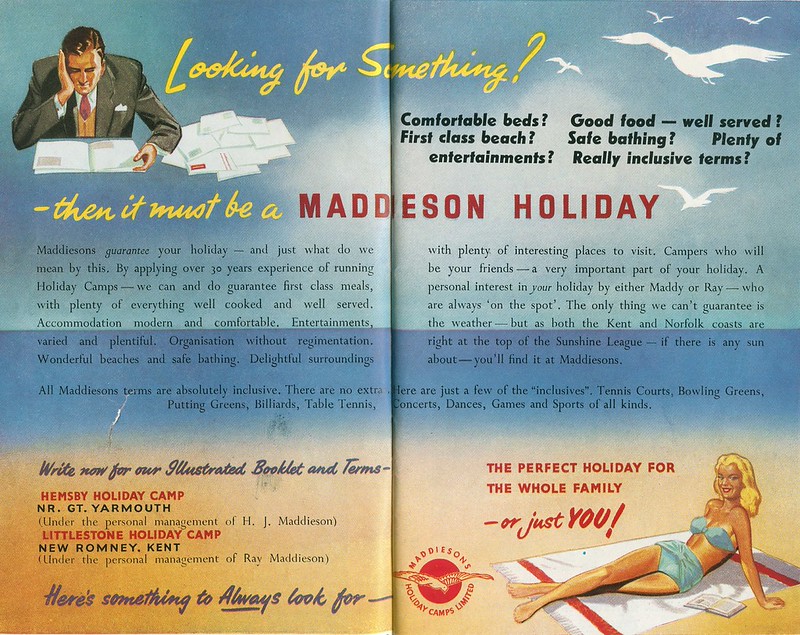
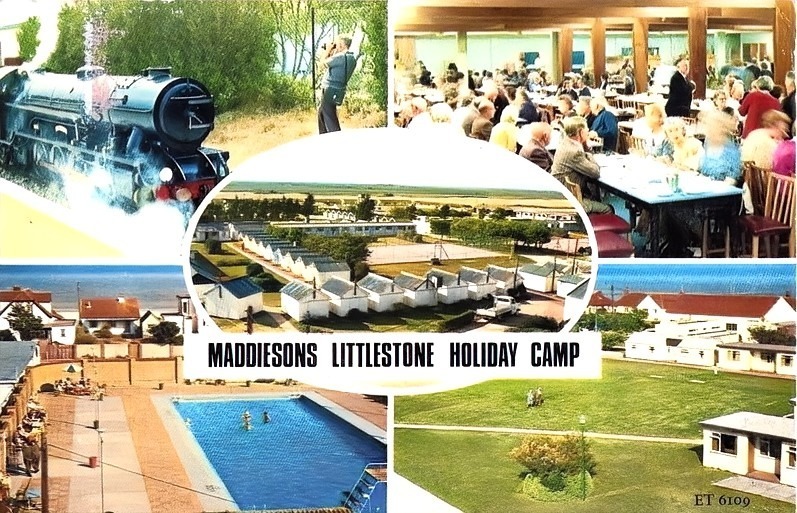
The early chalets were basic wooden sheds with a bed. None had running water. Cold water stand pipes were dotted around the site. There was a shower block with hand basins and hot water, and a separate toilet block in each part of the camp. In common with all other camps, the site was full board with all meals provided. These were taken in the large communal dining hall which could accommodate all holidaymakers in one sitting.
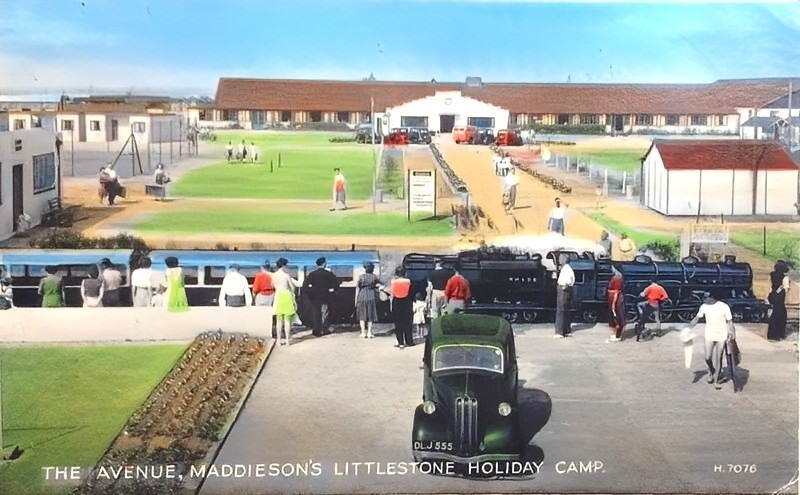
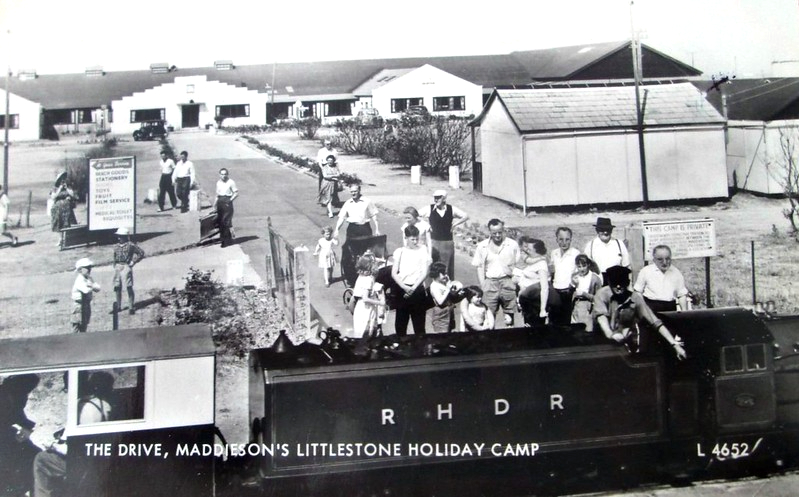
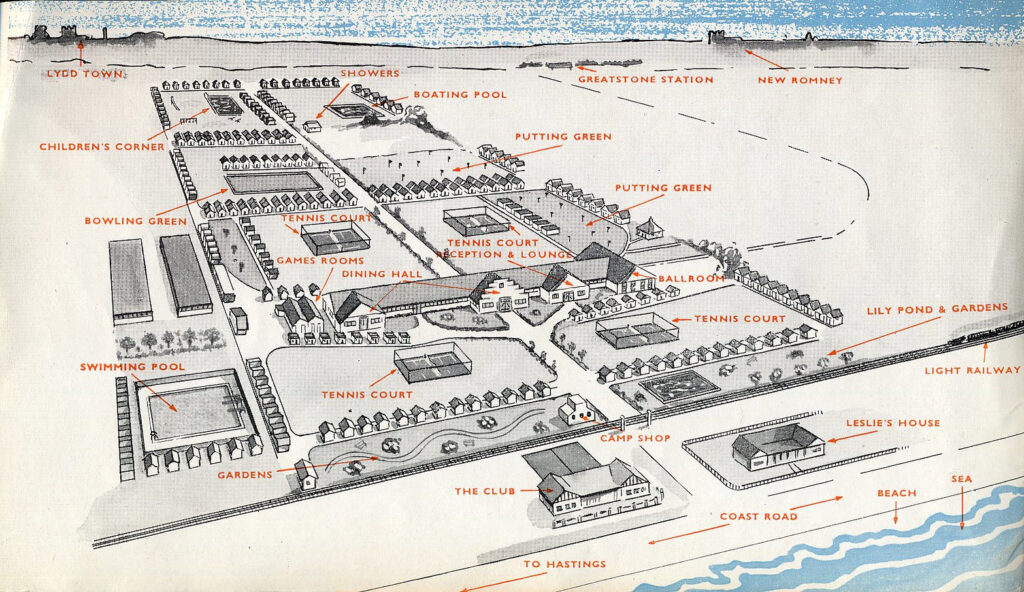
The camp was located adjacent to the Romney Hythe & Dymchurch Railway and a station was built to serve the new camp, originally called Maddieson’s Camp. Many holkidaymekrs would arrive via the railway and special trains would be operated on Saturdays from Hythe.
Local developers had ambitious plans for the Littlestone area, and additional roads were laid out in preparation for future growth. However, the outbreak of war brought these schemes to a halt, and most of the proposals were later abandoned. In the years that followed, the area became known as Greatstone.
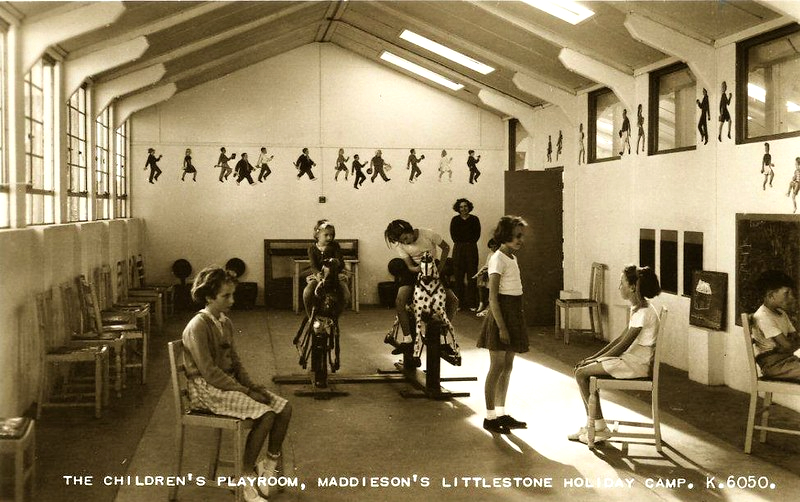


During the war, the camp was initially used to house evacuated London schoolchildren, but it was soon requisitioned by the military. It went on to play an important role in the development of the PLUTO project — the “Pipeline Under the Ocean” — a top-secret scheme to supply Allied forces in France with a steady flow of petrol following the D-Day landings. The pipeline was laid across the Channel from the Kent coast, with Littlestone chosen because it was among the closest points in Britain to France. Engineers and military personnel based at the camp helped to prepare the equipment, test the technology, and oversee sections of the installation.
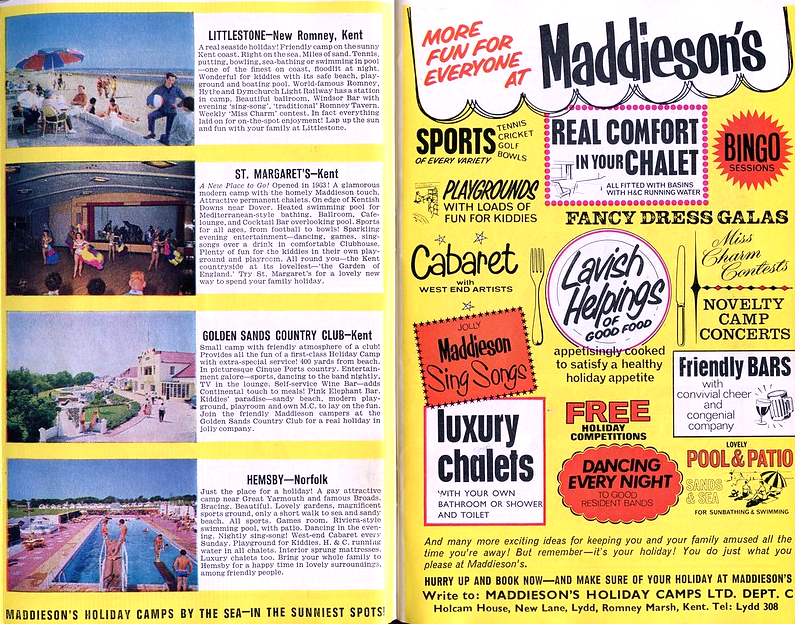
The camp suffered heavily during the war, and by 1945 everything was described as being in a “dreadful condition.” It was patched up sufficiently to allow a partial reopening in July 1946, though much work was still needed. The following year, the Maddiesons purchased a derelict camp at Camber Sands, and all usable material was transported to Littlestone to aid in the rebuilding efforts. The camp was also enlarged in size with an extension to the west. Camber itself remained closed for many years before being fully rebuilt and reopened in 1958. That same year the Maddieson family also acquired the Golden Sands holiday camp at nearby St Mary’s Bay.
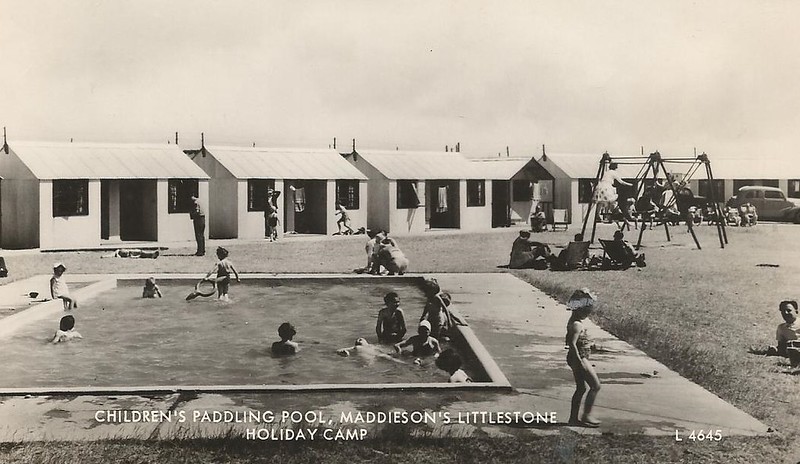
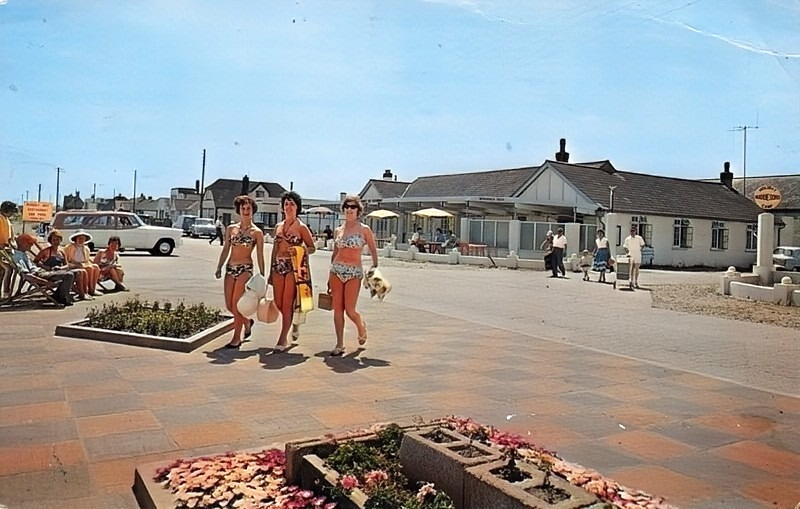
The 1960s brought a burst of new attractions including a heated swimming pool and new chalets with private bathrooms. But change wasn’t all positive. In 1968, after 38 years at the helm, long-time manager Leslie Hambridge retired and was succeeded by Major Charles Smith. Smith’s obsession with security soon defined his tenure. He hired a large security team, giving the camp a stern, almost hostile edge that many guests resented. Complaints mounted – not just about the heavy-handed guards but also about slipping standards across the site. By 1974, Smith’s regime had run its course, and he was dismissed.
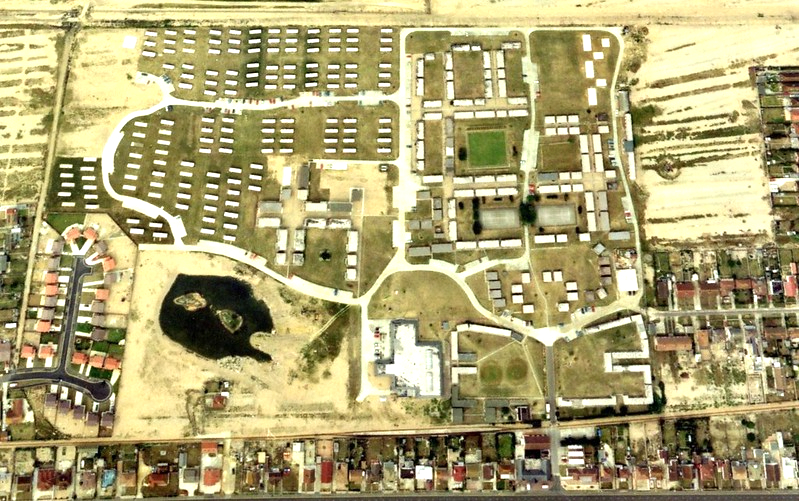
During the 1970s, the camp expanded to the south. Because of the growing shift towards self-catering, a number of new self-contained chalets were built, These units, available in one- or two-bedroom layouts, came equipped with their own kitchens and bathrooms, offering guests greater independence and comfort.



In 1979 the Maddieson family sold their three holiday parks (Littlestone, Camber Sands and St Margarets) to Oakley Investments, which operated a number of other holiday parks under their Diamond Plus Holidays brand. The Golden Sands camp had been sold in 1973. The Littlestone camp was renamed to Romney Sands. Later that year a salmonella outbreak sent 12 people to the hospital and the camp was forced to temporarily shut down.
In December 1981, disaster struck when a massive fire tore through the main building, wiping out the reception, ballroom, sports rooms, and dining hall. Although plans to rebuild were announced, they were soon abandoned. Instead, the focus shifted to building new self-contained chalets, sold on 21-year leases with eight-month occupancy rights. Caravans were also introduced, marking a shift away from the old full-board model towards self-catering and private ownership.
The Great Storm of 1987 hit the camp hard. One caravan was hurled through the air, smashing into an ambulance and leaving three people in hospital. Yet the site bounced back, and by 1992 Romney Sands beach was flying the prestigious Blue Flag award for its outstanding cleanliness.
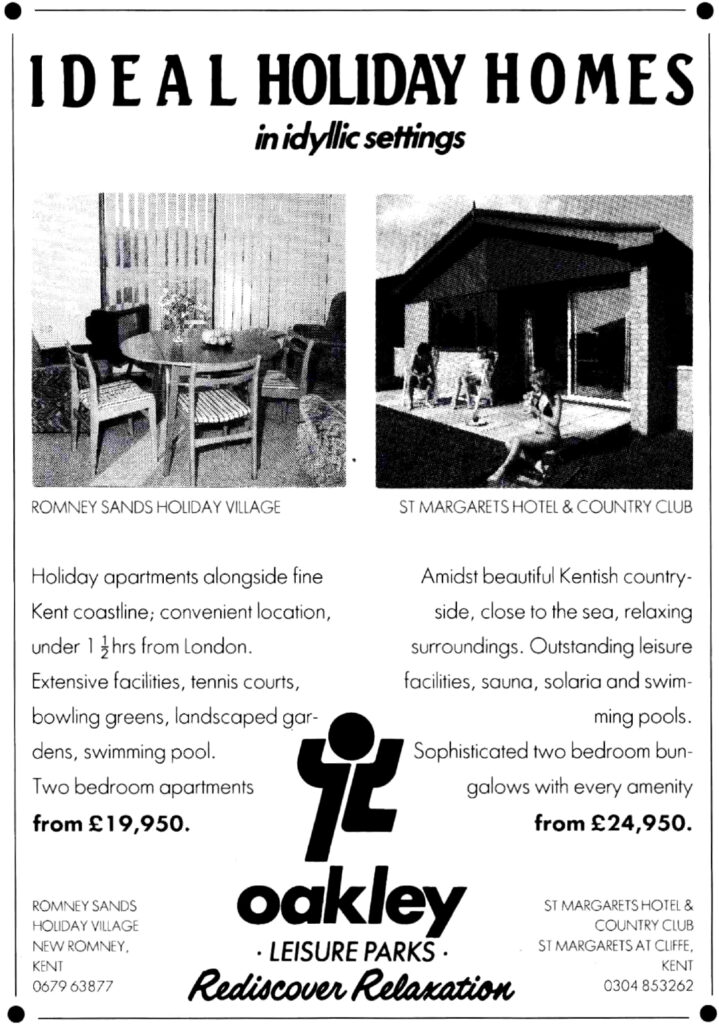
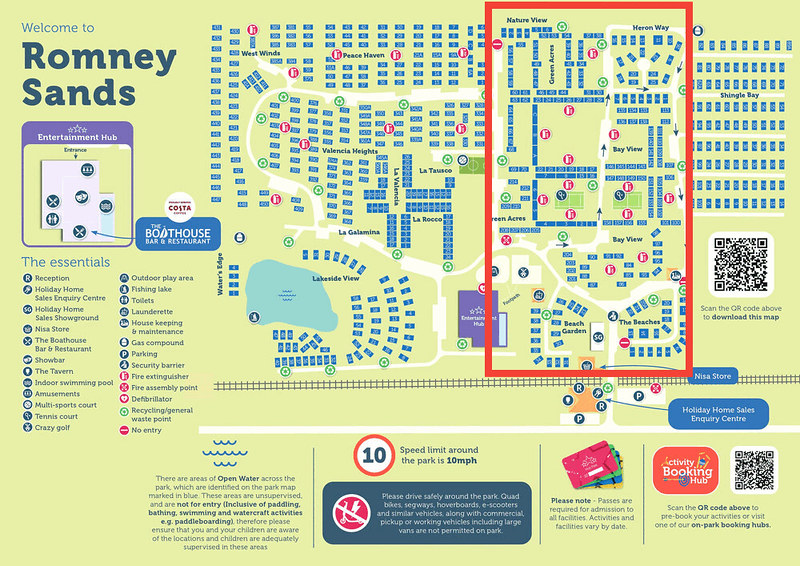
In 1995, Oakley put its three Maddieson parks on the market with an asking price of £10.75 million. At the time, Romney Sands spanned 41 acres and offered 181 chalets and 54 apartments, many of them privately owned. The parks were bought by Queensborough Holdings and absorbed into their Leisure Great Britain division. Expansion, however, soon hit a setback: in 1996, plans to add 63 more chalets were rejected amid concerns that the local water supply couldn’t cope.
Queensborough steadily expanded its portfolio to 19 sites, rebranding them all as Great British Holiday Parks. In November 2004, the entire group was sold to ABN Amro Capital – the venture capital arm of the Dutch banking giant – for £105 million. Just a month later, ABN acquired Park Resorts for £165 million. The two companies were merged, creating the UK’s second-largest holiday park operator with 35 sites, all trading under the Park Resorts name.
A decade later, in 2015, Park Resorts merged with Parkdean Holidays to create Parkdean Resorts. Today, the company is the UK’s largest holiday park operator, with more than 60 sites nationwide. Romney Sands remains open and as popular as ever. While many chalets are still in use, their numbers are dwindling as leases expire, gradually giving way to more lucrative caravans.

We’d love to hear your stories and memories of the Littlestone camp. Please feel free to leave a comment below.
