Before it became a theme park, Alton Towers was already one of Britain’s most popular attractions. While the theme park history has been well documented, the years leading up to it remain a fascinating and often overlooked chapter. This article looks back at that era, from the 1950s through the 1970s.
A brief history of the early years
The estate which later became Alton Towers was originally over 8,000 acres in size and had been in the Talbot family, the Earl’s of Shewsburys, since 1406. During the early-1800s the 15th and 16th Earls were responsible for building the large house known as Alton Towers. along with the gardens. The total cost was more than £1 million—well over £100 million in today’s money. Its gardens, once described as the most beautiful in England, remain one of the estate’s greatest treasures.
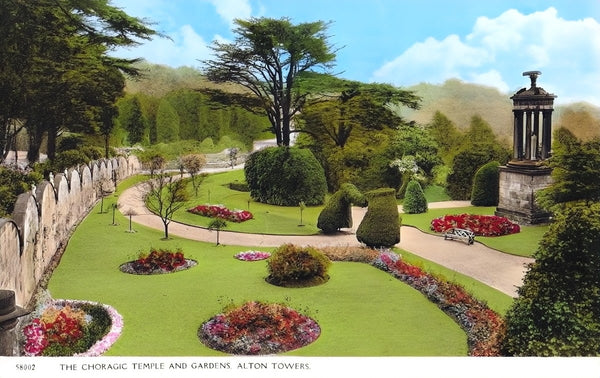
The nearby Alton railway station opened in 1849 and visitors to Alton Towers were admitted every summer with most arriving by train. In 1896 the estate’s owner, the 20th Earl of Shewsbury separated from his wife and moved to Ingestre Hall near Stafford. He left her behind at Alton Towers, paying her £4000 a year for living expenses and for the upkeep of the estate. But at some later point he stopped paying for the upkeep and the gardens became overgrown and neglected. In 1918 he sold 7000 acres of the estate land, which included the village of Alton, leaving 1100 acres around the house itself.
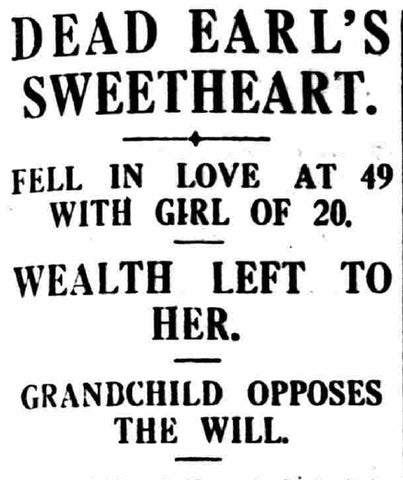
In later years he took up with a younger girlfriend, and when he died in 1921 he left almost everything to her. At the time he died he was 60 and she was 31. With his only son killed in the First World War, representatives for his young grandson started legal proceedings over the will. Amid the turmoil, the house and remaining land was put up for sale.
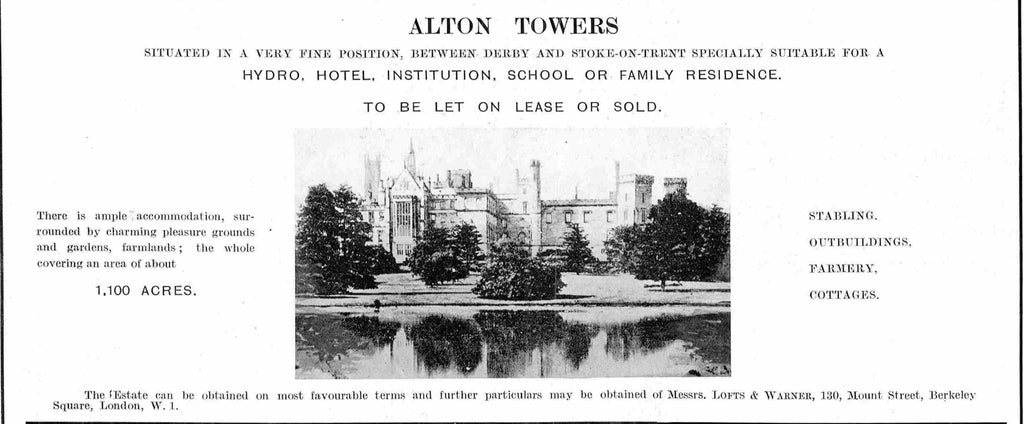
In January 1924 the entire contents of the house were sold at auction. There was so much stuff (4,000 lots) that the auction lasted for 11 days. The contents had already been sold once before, back in 1857 following another dispute.
After the contents were gone, the estate was acquired by a consortium of four local businessmen including solicitor Reginald Cowlishaw and auctioneer/estate agent William Bagshaw. The overgrown gardens, which had been neglected for over a decader, were cleaned up by a small army of workers.
The estate reopened to the public at Easter 1924 advertised as “The new playground for the Midlands”. Special trains were laid on from Leicester, Nottingham, Derby and Macclesfield. 15,000 people showed up on Easter Monday and the “food and drink supplies were soon exhausted and many had to go without”.
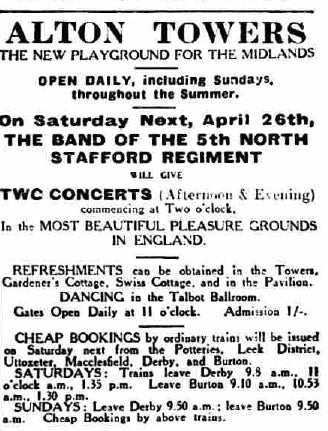
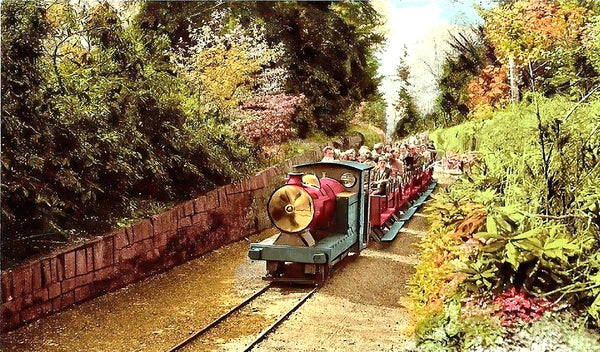
The estate soon settled into a popular routine, opening daily throughout the summer months (except Sundays). Visitors could enjoy food and refreshments in the grand banqueting hall or take tea in the gardens of the Swiss Cottage. An alcoholic bar was established in the Grand Entrance Hall, while boating and fishing were offered on the lake. A team of fifteen gardeners worked tirelessly to keep the grounds in order.
During the 1930s, half of the visitors were still arriving by train and the station was enlarged to meet demand, the platforms were lengthened, the toilets modernised and road access improved. Excursion trains ran from all around the country and up to 20 trains a day would arrive. Special late-night evening trains were operated for the popular Saturday night dances.
The 1940s
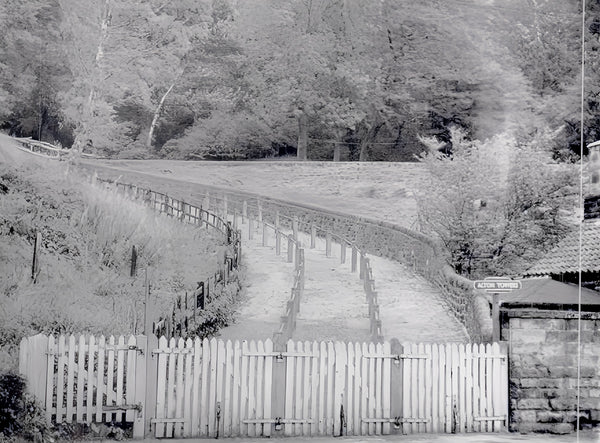
The towers and grounds were requisitioned at the outbreak of war in 1939. The gardens were not included in the deal and 3 elderly gardeners did their best to keep them looking somewhat presentable. They did open to the public on several occasions during the war, all of which were well attended. The main house was used as an officer cadet training school and over a hundred brick huts were built in the grounds.
.After the war, the estate opened in June 1946 for 3 days in aid of the Army Benevolent Fund. Boating on the lake was available on boats “that had crossed the Rhine”. It opened again for 3 days in August when 5000 people turned up and £570 was raised for the fund.
The soldiers moved out in September 1946 and it was then used as an Army School of Education until April 1948, when it was transferred by the War Office to the Ministry of Works. The Ministry contacted the local council and offered the brick outbuildings as temporary housing for those who had lost their homes during the war. This was news to the park owners, who only found out via the local newspaper. They were none too pleased as they were anxious to reopen to the public. The council were certainly interested but the project was later abandoned over cost.
The Ministry then removed all the wartime defences and demolished the huts. Most of this was complete by the end of 1949. Police who had been guarding the building were withdrawn and one man was put in charge of securing the entire estate. Vandalism became a major problem and “hooligans were going round committing thousands of pounds worth of damage”.
The 1950s
The estate was finally handed back by the government in June 1950. After 11 years of military occupation, and the lack of sscurity in later years, the house was in a very sorry state. Windows on every floor were shattered with doors broken and splintered. Lead had been stripped from the roof leaving the rain to pour in through the rafters. Locks were broken and names had been carved into the ornate woodwork. Valuable tapestries had been ripped and were hanging off the walls, cupboards had been ripped out and statues damaged or daubed with paint. Most of the grounds were a jungle of weeds and neglected shrubbery. The Chinese Pagoda was a “rusting, weed grown skeleton”. Pathways were overgrown and the lake was described as a swamp.
An auction was held in 1951 to sell of a large quantity of interior fittings before they became totally worthless. This including 300 doors, mirrors, window frames, roofing slates and over 300,000 ft of oak and pine boards. During the auction “crowds trampled over broken glass, fallen plaster and pools of water where King Edward VII once dined and danced”. The owner of Teignmouth Pier traveled all the way up from Devon to bid on the oak flooring in the banqueting hall, but was outbid.
The chairman of the owning company, Reginald Cowlishaw said “The army hung onto it too long. The damage was too great. We couldn’t possibly make it good”. The house and grounds were put up for sale with an asking price of £57,000.
The parish council expressed an interest in buying the site but were “amazed and shocked” to find the buildings in such a dilapidated condition. They decided not to take it on “The people who run Alton Towers are businessmen and if there was any money to be made they would keep it”.
In January 1952 it was announced that original consortium member William Bagshaw had now become the majority shareholder “We may pull the house down. Perhaps we can clear the lakes and get the fountains going and let the public in. We don’t know, everything is uncertain at this stage”. Staffordshire County Council stepped in with a preservation order to prevent any further demolition taking place.
In April 1952 it was announced that the grounds would be reopening to the public in May. Everything was cleaned up and the lake was reopened for boating and fishing. The summer proved popular, despite the house being out of use. They advertised “no petty restrictions” which meant you could walk on the grass, climb the trees and even fish in the lakes. In July 1952 “the largest rally of motor cycles in the whole of Europe” was held and over a thousand bikes attended. A permanent 3/4 mile motor cycle racing track was built.
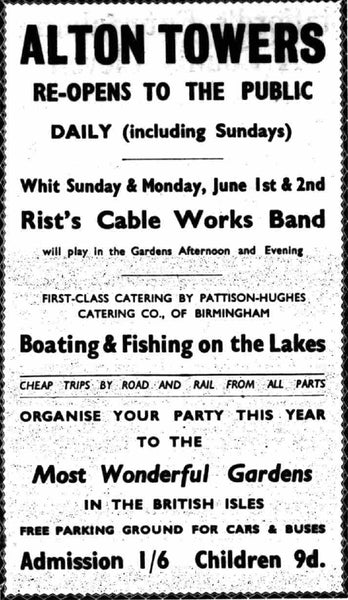
In 1953 a miniature railway was added running along a former estate drive. The train had previously operated at Lilleshall Abbey where it had spent the previous 13 years locked away in a shed. The motor cycle course was improved and in October “the largest crowds ever seen at Alton Towers” arrived for the East Midlands ACU race.
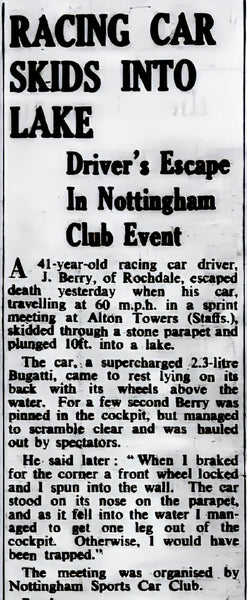
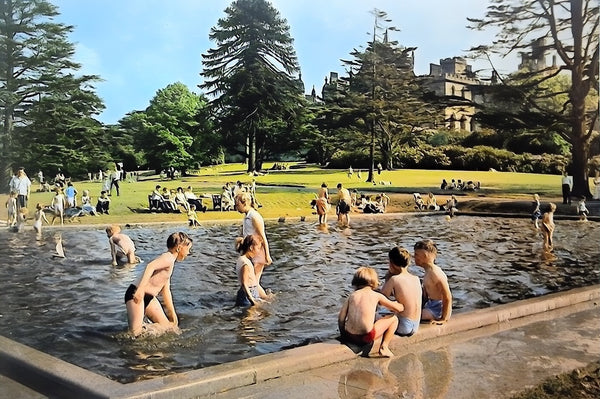
In 1954 a kids paddling pool and pottery studio were added. During a motor race in October a supercharged Bugatti crashed into the lake at 60mph. It landed upside down, but thankfully the driver was able to escape. No more races were held for the next 15 years.
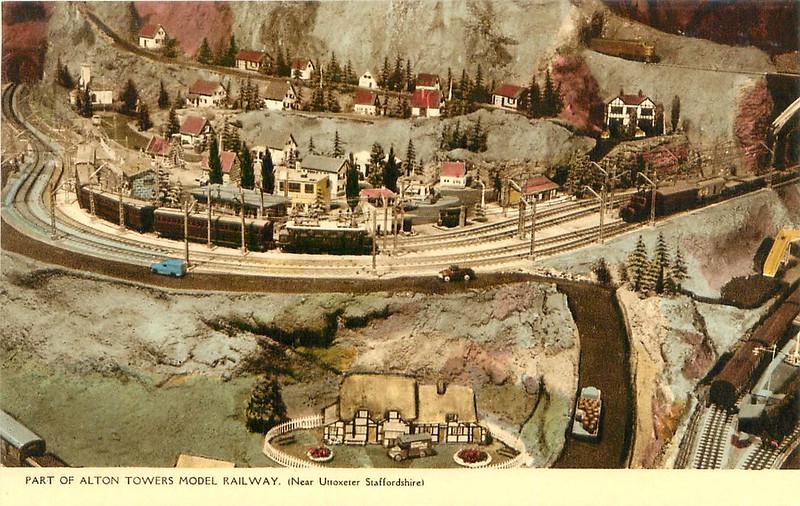
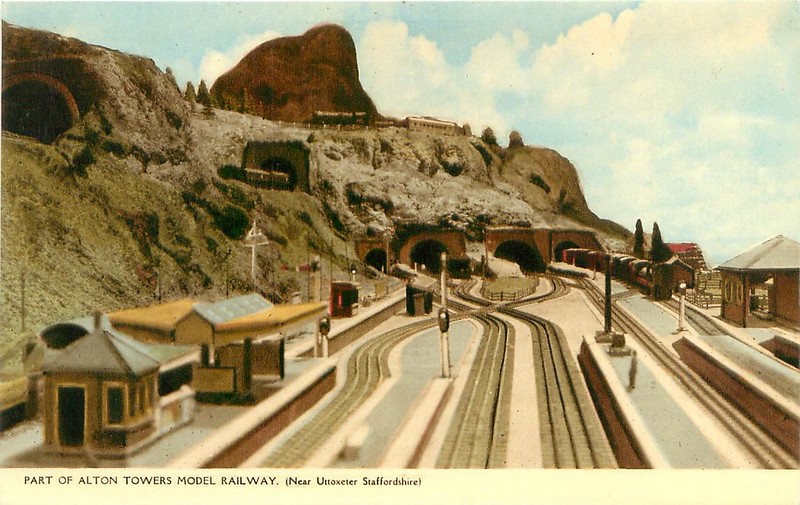
In 1956 William Bagshaw died but the site continued to be run by his son Dennis. In 1957 a £4,000 model railway opened in the old chapel and became the largest fully-automated model railway in Europe. In 1958 a Peter Pan Railway was installed.
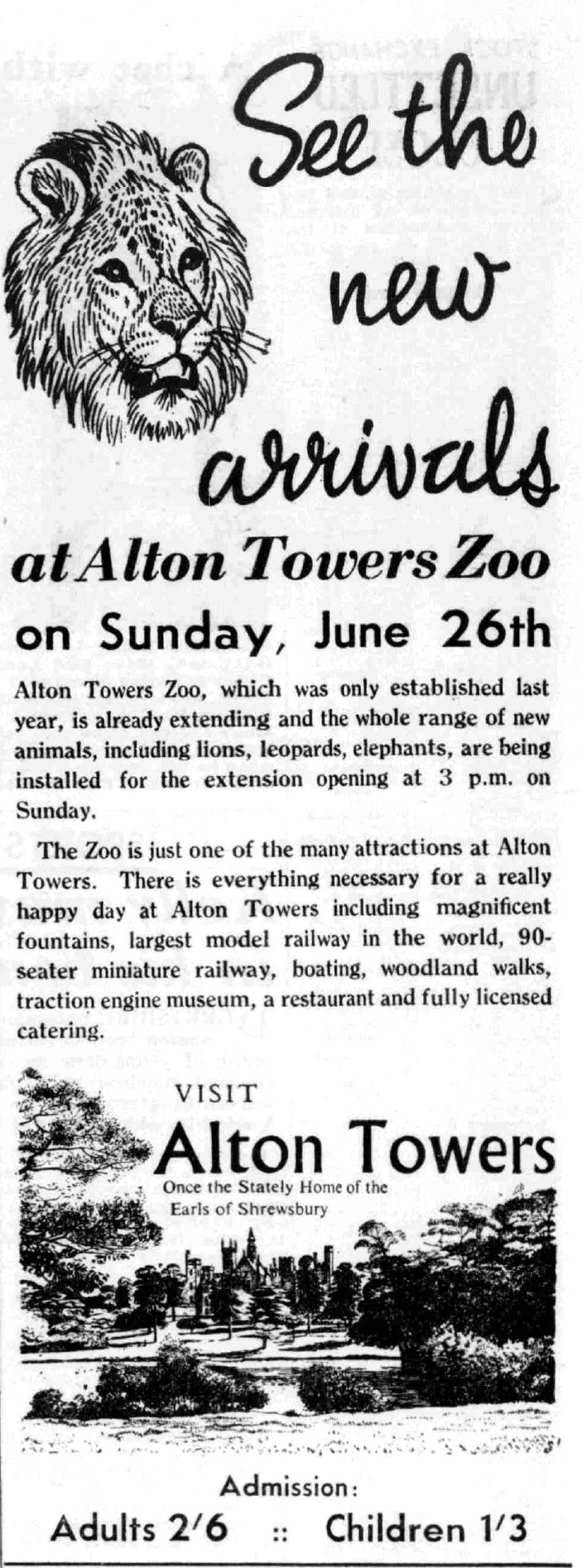
In 1959 a small zoo was added along with an aquarium and aviary. It was opened by TV personality Bernard Miles. It featured “monkeys from Africa and Asia, parrots and macaws from the jungles of South America, wallabies from Australia along with leopards, cheetahs, bear cubs and a variety of other animals”
Most of the attractions had their own separate admission fee, and some were operated by concessionaires. For example the model railway was built and operated by a father and son team, Percy and Aubrey Bentley.
The 1960s
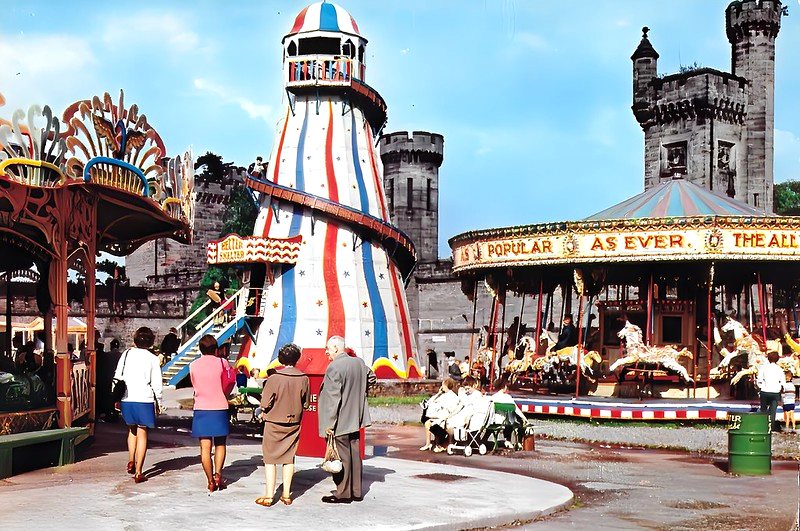
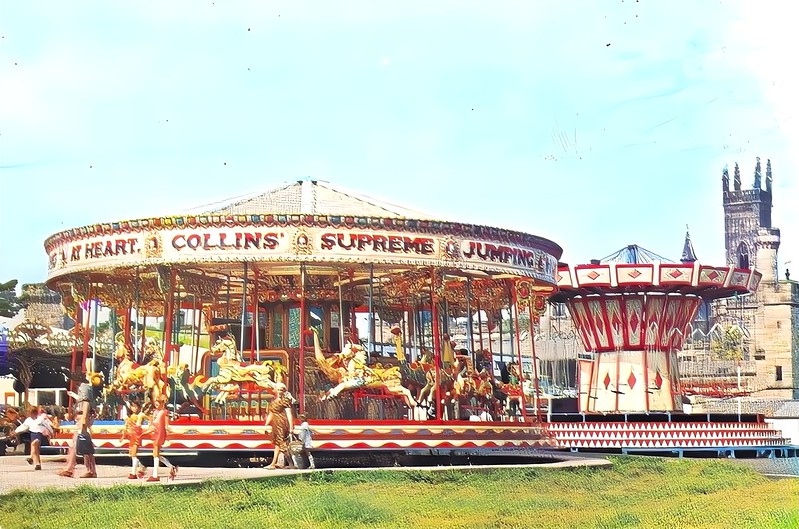
In 1960 a permanent funfair was added behind the towers run by Brian Collins. Various rides came and went over the years including a waltzer, helter skelter, gallopers, chair-o-plane, dodgems, ghost train, and fun house. The zoo was enlarged. A newspaper columnist remarked that “this once regal residence has been commercialised and transformed under the banner of ‘appealing to the popular taste’ and has lost all of its tranquil and serene appeal”.
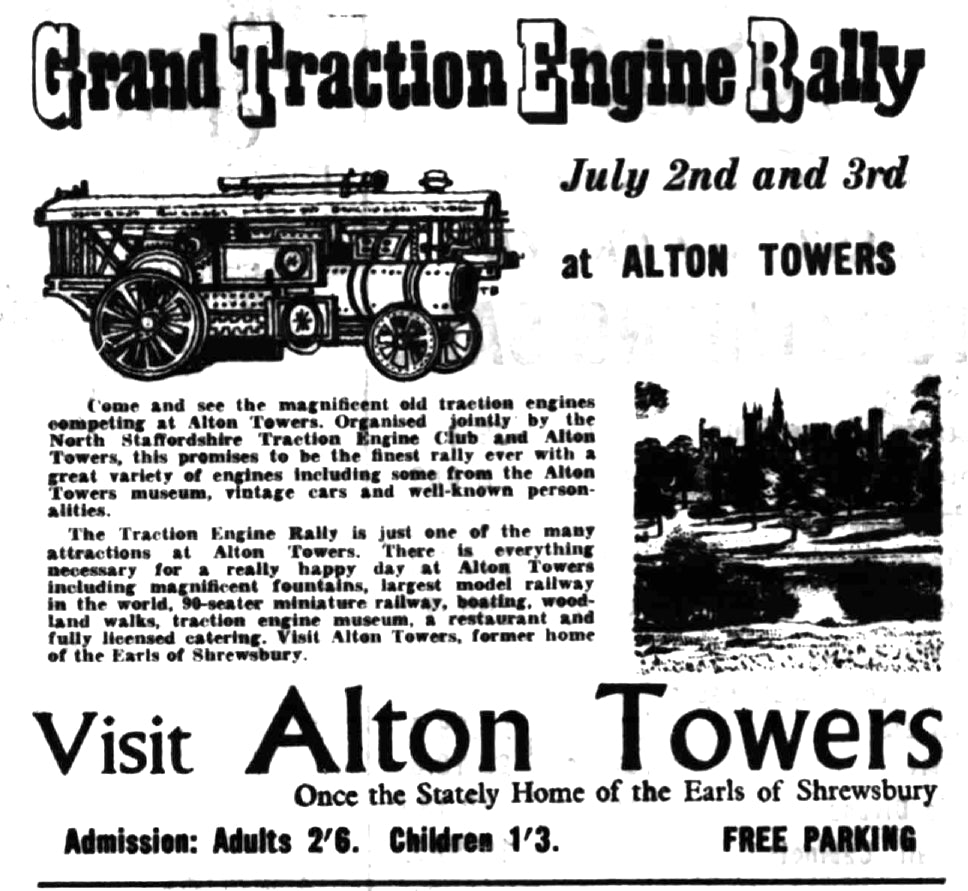
In 1961 a traction engine rally was held which attracted 12,000 visitors over the weekend. Dennis Bagshaw was a traction engine enthusiast and had some of his own, which he put on display in a permanent museum which opened later that year.
At Easter 1962 the park had its best weekend ever with 18,000 visitors on Easter Sunday and 28,000 on Easter Monday. Traffic was at a standstill for 6 miles causing many motorists to turn around and give up. The RAC said the weekend was busy everywhere and said it was “unequaled in motoring history” with 150 miles of solid jams up and down the country. Despite this, lots of visitors were still arriving by train.
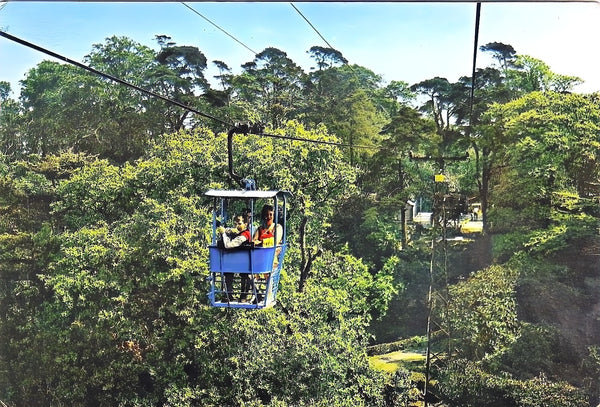
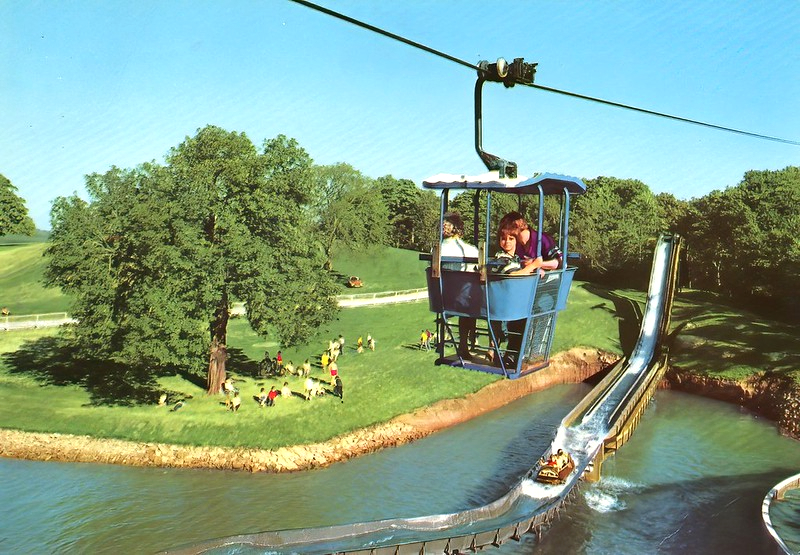
In 1963 a chairlift was opened by Antony Bagshaw, brother of Dennis, which he ran as a concession. He later went on to build the Llandudno cable car in 1969, and in 1975 he acquired the White Scar Cave in North Yorkshire. Also that year the new 800-seat Talbot Restaurant was opened. The zoo appears to have closed around this time.
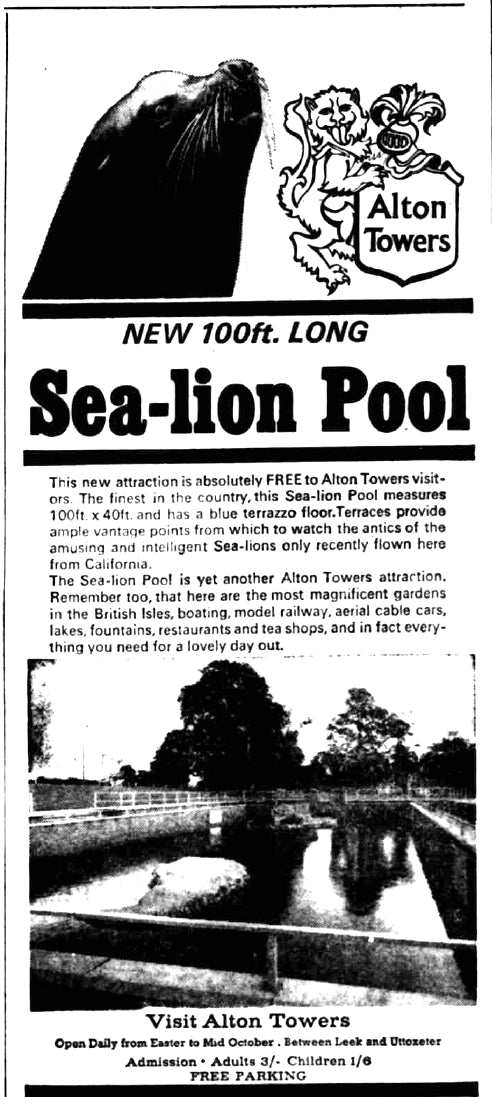
The railway line serving Alton Towers was closed in January 1965. In 1966 a 100ft x 40ft sea-lion pool was opened, advertised as “the finest in the country”.
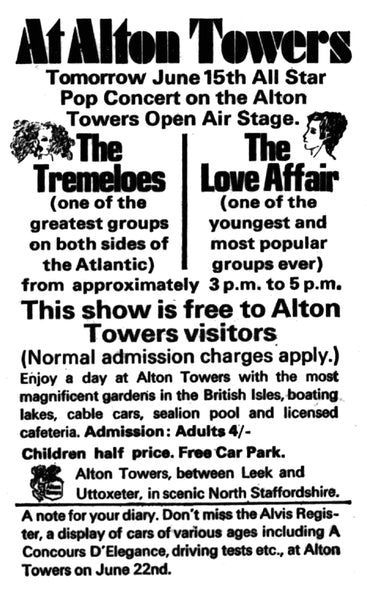
In 1969 a series of free-to-enter pop concerts was held over the summer with different acts appearing each month. This included The Tremeloes, The Move, The Montanas, The Love Affair, The Marmalade and The Ambrose Slade. Also that year a large horse show was staged along with a vintage car show. The old race track was brought back into use for cycle racing and the following year motor racing returned after a 15-year absence.
The 1970s
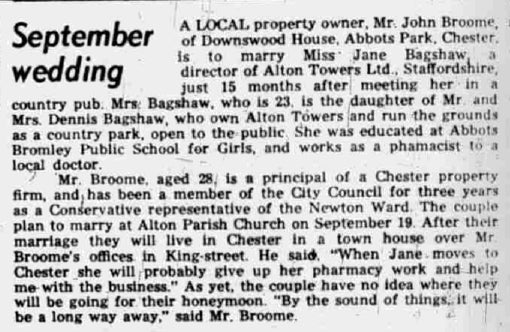
In 1971 a camping and caravan site was opened. In 1972 John Broome, a property millionaire and Chester City Councillor, married Jane Bagshaw, daughter of Dennis, at Alton Towers parish church. The following year Dennis Bagshaw made Broome Chief Executive of the company so he could spend more time attending to his estate agency business.
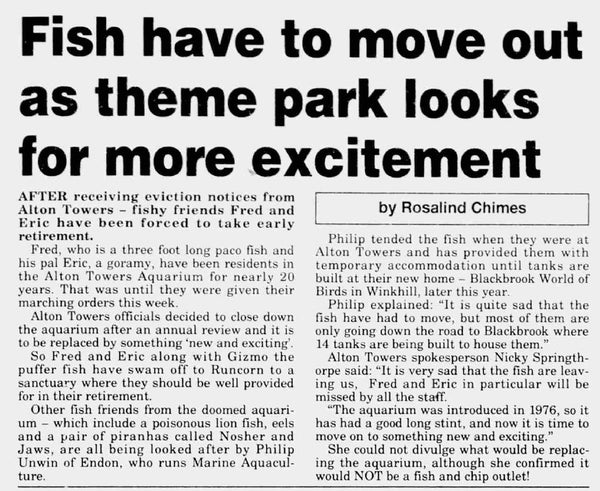
In 1974 Broome added a Planetarium and a road train called The Towers Express. Throughout the rest of the 1970s he bought out several park concessions to bring them under his personal control, including the miniature railway. In 1975 the Daily Mirror held its annual garden party and 35,000 people turned up. In 1976 an aquarium was opened.
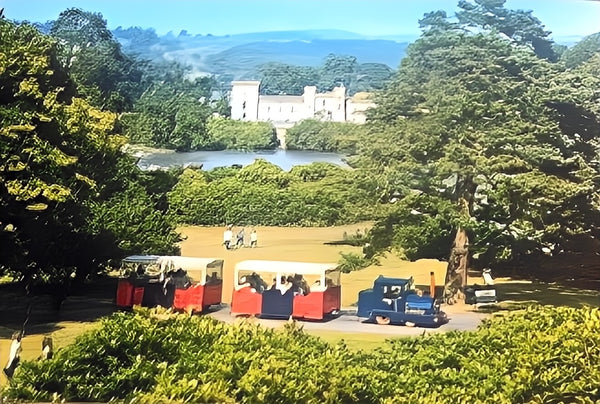
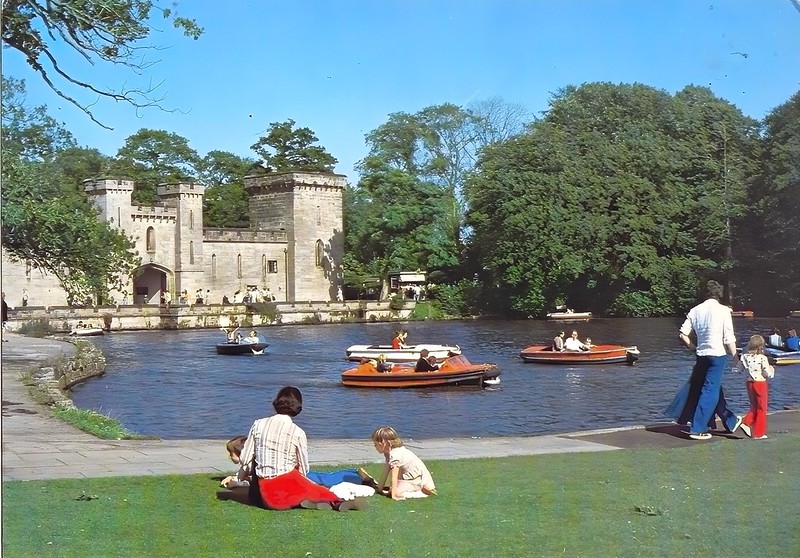
In 1978 Broome acquired a steam locomotive for possible future use. It was a smaller gauge than the existing miniature railway so it became more of a toy that was steamed up occasionally for fun. It remained at the Towers until 1985.
In 1979 Broome spent £250,000 installing a Cine 2000. Another £100,000 was spent on an Alpine Bobsleigh which consisted of two parallel tracks, each 150m long. Made in West Germany the troughs consisted of preformed asbestos cement.
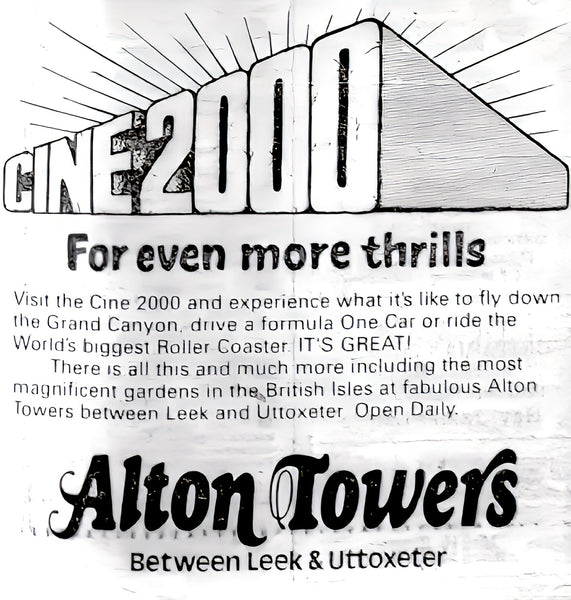
At this time, admission to the park was £1 which included access to the grounds, the sea lions, kids playground and paddling pool. Everything else was an upcharge – for example, the new Cine 2000 was 50p, the miniature railway 30p and the road train 20p.
Alton Towers becomes a theme park
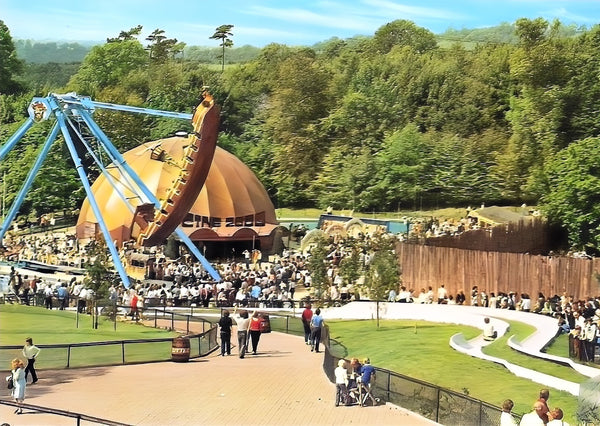
In 1980, the park introduced a controversial all-inclusive admission fee of £2.50, covering all rides and attractions. As part of this change, the funfair was closed and fenced off, and most of its rides were later removed. But the Astroglide slide did reopen and remained into the 1990s. Most other attractions were left unchanged.
Broome announced a shift in focus towards the family market, which led to the closure of the park’s highly profitable bars. His aim was to create a family-friendly atmosphere where parents and children could enjoy the attractions together, without the fathers wandering off for a drink.
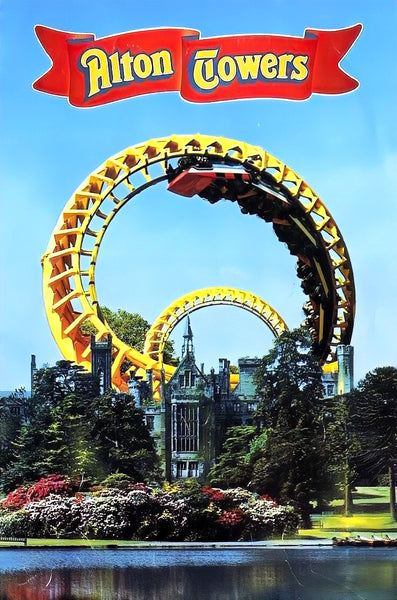
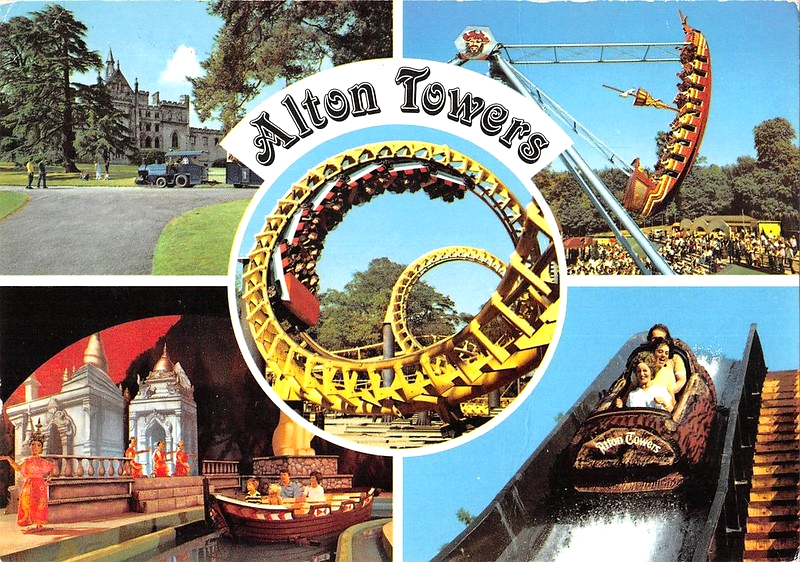
April saw the grand opening of a thrilling new chapter in British theme park history, the Corkscrew roller coaster. The first of its kind in the UK, it instantly became a national talking point. Huge crowds at Easter caused 9 mile tailbacks on local roads. The park gates had to be closed by lunchtime with police turning people away. Complaints poured in about overcrowding. A mum-of-two said “we paid £7.50 to get in and all we got was one ride on the miniature railway”. 6 hour queues to ride the Corkscrew were not uncommon. Broome blamed the overcrowding on gatecrashers “when they found the gates locked, they simply left their cars and climbed over the fences”. He vowed to employ more security to patrol the perimeter on busy days.
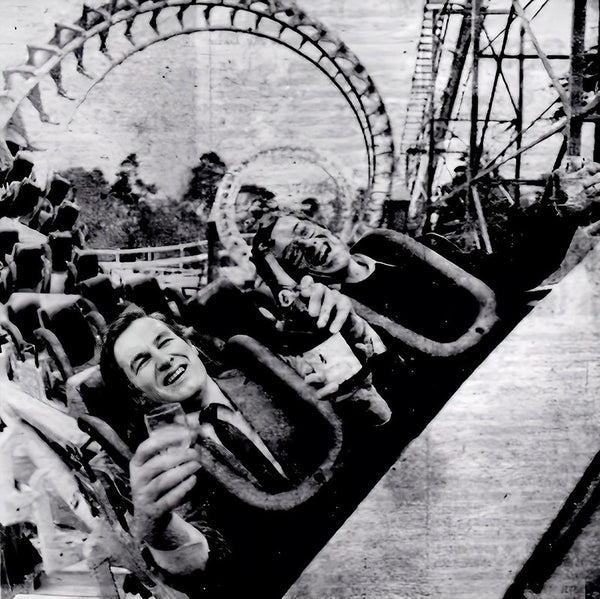
It’s hard to appreciate today just how much of a sensation the Corkscrew was when it first opened. Hoping to mirror Alton Towers’ success, Clacton Pier unveiled its own Corkscrew only three years later. But by then the novelty had already worn off, and the ride attracted little fanfare.
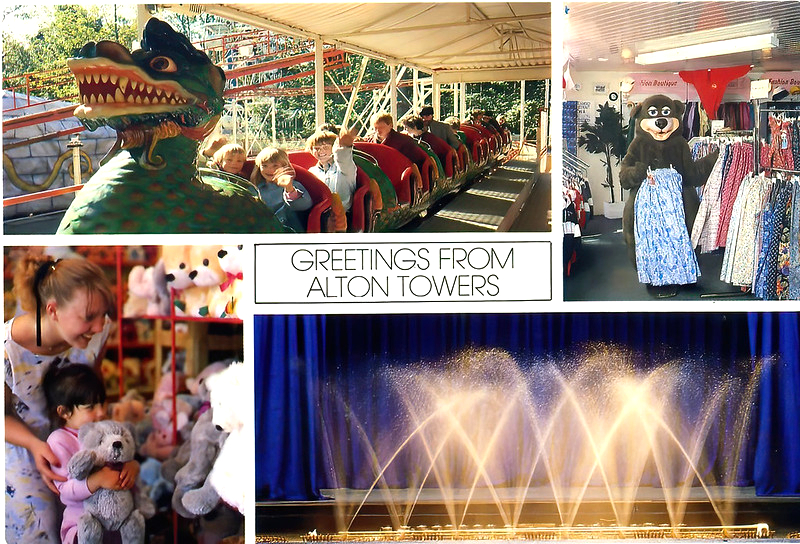
The Towers history since 1980 had been well documented elsewhere so we won’t repeat it all here. We’d recommend visiting Towers Street or Towers Times.
What happened to the old pre-1980 rides?
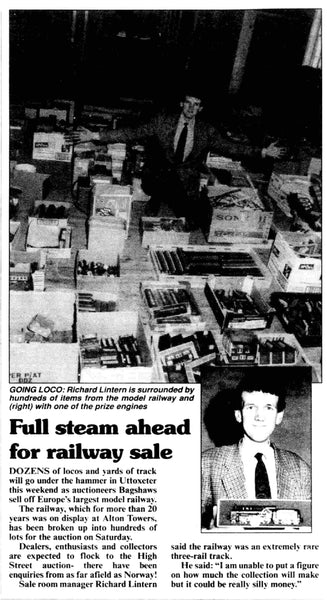
The Alpine Bobsleigh remained open until 1986, to9i-=x he Planetarium until 1987, the sea lions until 1990, the paddling pool and model railway until 1992, the aquarium until 1995. The model railway was auctioned off in February 1993, split up into 325 lots, which raised a total of £9,000. The original locomotive from the miniature railway, along with some of the carriages, can be seen today at the Old Kiln Light Railway in Surrey.
In 1982, Dennis Bagshaw retired from the board, with John Broome taking over as chairman. Bagshaw continued to live on the Alton Towers estate until his death in 1988 aged 73. Two years later, Broome was forced to sell the park because of debts incurred during his ambitious but ultimately unsuccessful attempt to transform Battersea Power Station into a theme park. It was acquired by The Tussauds Group for £60 million. John Broome died in 2023.
We’d love to hear your memories and stories about Alton Towers. Please feel free to comment below.
